Office Address: 5, Ishola Bello Close, Off Iyalla Street, Alausa, Ikeja, Lagos, Nigeria.
Introduction
It is one of the pivotal sectors. Most people are familiar with it in that it greatly contributes to the construction and infrastructure development effort of the nation. The supply of raw materials such as granite, limestone, and sand needed for building a house, and the employment it provides at different levels within the quarry operation add to local economic development through quarry establishment.
Quarrying supports construction, real estate, and road construction. It provides the demand for aggregates and dimension stones, which will change a person’s life from quarrying and contribute to national development.
To help prospective quarry entrepreneurs and businesses start a quarry business in Nigeria, this guide provides the steps to market research and planning, including operations, compliance, and sales strategies, drawn up with an eye to success in this dynamic industry.
Market Research and Analysis
Overview of the Nigerian Quarry Market
The quarry market in Nigeria is very dynamic and buoyant mainly because of the increasing demand for raw materials in construction and infrastructure development. Indeed, urbanization and industrialization continue to expand, and so is the demand for quarry products like granite, limestone, and aggregates.
Anyone thinking of establishing a quarry in Nigeria, however, needs to know the market dynamics to identify opportunities and growth areas.
Demand and Supply Analysis
The demand for quarry products in Nigeria remains high, fueled by government infrastructure initiatives, private sector developments, and road construction projects. Supply, despite all these activities, is never enough, due to limited operations and logistics challenges; hence, there lies an opportunity for new entrants. To thrive in business, a company must have consistent product quality and on-time deliveries.
Market Segmentation and Targeting
– By product: Granite, limestone, sand, and other aggregates.
– By Region: Urban centers like Lagos, Abuja, and Port Harcourt, where construction is most active.
– By Industry: Target construction companies, road builders, and real estate developers.
Effective market segmentation would focus your quarry business in Nigeria* right at the most profitable and underserved markets.
Competitive Analysis
There are a few established players in the Nigerian quarry market, but innovative entrants will still make a mark in the industry. Carry out competitor analysis to know their strengths and weaknesses, pricing strategies, and customer profile. Your entry into the market could be through service superiority, heavy equipment, and competitive pricing.
Business Plan and Feasibility Study
Development of a Business Plan and Feasibility Study
As this goes unmentioned, taking into consideration that you have made up your mind to start a quarry business in this part of the region, going for a business plan is now the very first important step. A business plan is the blueprint of your business mission and objectives, operational strategies, and financial projections.
It is joined by a feasibility study into the practicality of the business in terms of market conditions, technical requirements, and investment needs.
The whole package will help direct your business activities and is critical in attracting investors or getting loans.
The Business Model Definition and Revenue Streams
Defining a sustainable business model is crucial for the success of your quarry business in Nigeria. Revenue streams will usually include:
– Sale of Quarry Products: granite, sand, limestone, and aggregates;
– Contract Quarrying Services: offering extraction and crushing services to other businesses;
– Recycling and By-Product Sales: selling overburden materials or small aggregates for secondary uses.
Your business model has to go with what has been found after the market research considering operational capabilities.
Assessment of the Technical and Financial Viability of the Project
– Technical Feasibility: Assessment of availability and accessibility of the quarry sites, quality of raw materials, and type of machinery and equipment required.
– Financial Viability: Initial capital investment, operational costs, and revenue potential-analyze these indicator costs then ensure that projected returns justify the costs as the funding options are organized well.
These measures go a long way in determining whether to start a quarry business in Nigeria. More so, its viability and profitability to you.
Identification of Potential Threats along Mitigation Strategies
Every type of business has risk; quarry business is not exceptional. The likely risks include the following:
Regulatory Challenges: Delay in obtaining licenses or permits.
Mitigation: Seek legal advice and comply with regulations from the beginning.
Market Fluctuations: The changes in demand or price for quarry products.
Mitigation: Diversifying the product lines and securing long-term contracts with key buyers.
Operation Risks: Machinery breakdown and labor issues.
Mitigation: Invest in quality equipment and maintain a strong workforce management practice.
Environmental and Community Concerns: Negative impacts through either local ecosystems or disputes with communities around.
Mitigation: Environmental Impact Assessments (EIA) and ensuring a transparent process of communication with the stakeholders.
These are the issues that will make your plan such that there will be challenges in starting a quarry business in Nigeria.
Licensing and Permits
Overview of the Licensing and Permitting Requirements for Quarrying in Nigeria
Obtaining the right licenses and permits serves as one of the preconditions for *starting a quarry business in Nigeria. Quarrying activities are governed in Nigeria by the Nigerian Minerals and Mining Act, and businesses interested in using it must comply with the provisions of the Act to operate legitimately.
These include all necessary documentation – exploration license – mining leases, and environmental approval depending on the scale and nature of the project.
Importance of Obtaining Necessary Licenses and Permits
Failure to acquire or display the right licenses can lead to penalties, project freezing, or in extreme cases, closure of business. Obtaining the necessary permits ensures:
– Legality: Compliance with all laws and regulations of the Federal Republic of Nigeria.
– Credibility: protects the interest of investors, partners, and clients since it creates an impression of professionalism.
– Sustainability: Contributes to the protection of the environment and engagement with the community.
When starting your quarry business in Nigeria the most basic things that are must-haves are the licenses and permits.
Analysis of the Different Types of Licenses and Permits Required
Exploration License:
Essential for location surveys meant to establish potential quarry locations.
Issued by the Ministry of Mines and Steel Development (MMSD).
Mining Lease:
Requisite for enabling commercial quarrying business to operate.
Traditionally granted when the feasibility study and full business plan have been presented.
Becomes essential when measuring and managing the environmental impacts of quarrying operations.
Often the export licenses are approved by the Federal Ministry of Environment.
Community Development Agreement (CDA):
Necessary the interact with the host communities to encourage them to accept the project’s benefits.
Permit to Survey:
Required in explorations and demarcations of the quarry area.
Operational Permits:
Registered under safety and explosives permit for handling of quarry materials and blasting actions.
Read the licensing requirements that seem complicated at first sight, so you’ll be able to launch your quarry business in Nigeria efficiently. Asking persons who are aware of the process also adds to the time and money saved.
Procurement of Quarry License in Nigeria: Documents and Processes
Licensing to operate a quarry legally in Nigeria is one very essential step in quarrying as it is issued through the Ministry of Mines and Steel Development (MMSD) and the Mining Cadastre Office (MCO). Below is an extract that summarizes the contents of the documents needed to apply for a quarry license in Nigeria and the processes concerning its application.
Documents needed for a Quarry License Application
Application Form:
– A properly filled-in application form issued by the Mining Cadastre Office (MCO). The usually inquired information regarding such forms is about a company as related to the location of projects and the proposed quarry activities.
Certificate of Incorporation:
– Proof that your company is duly registered with the Corporate Affairs Commission (CAC) a copy of which has to be attached to the application.
Feasibility Study / Business Plan:
– Detailed feasibility study or business plan describing the scope of the project, the possible financial returns, quarry operations, and environmental effects.
Environmental Impact Assessment (EIA)- conducted report by an accredited environmental consultancy firm. This assessment is very important in establishing the expected potential environmental impacts of quarrying activities and how best to mitigate those impacts. The EIA must be forwarded to the Ministry of Environment and all other relevant authorities.
Tax Clearance Certificate- it is a proof that a certain company is tax compliant as at date. This will prove the business has complied with Nigerian tax laws.
Mining Lease Application (if applicable) – If you want to mine mineral substances falling outside the category of aggregate or construction material, then you also need to apply for a mining lease. This type of application attracts certain documents related to mining activities.
Proof of Ownership or Lease- Documents portraying ownership of land or the lease on which a quarry is to be set up: these may take the form of a Certificate of Occupancy or lease agreement.
Detailed Map and Survey Report- A detailed map showing the location, dimensions and boundaries of the quarry site. This is normally provided by a duly licensed surveyor.
Health and safety plan- Comprehensive health and safety plan detailing measures to safeguard workers and the surrounding communities from any risk that could arise from quarry operations.
Other Relevant Documents- Any additional documents as might be required by the Ministry of Mines and Steel Development or Mining Cadastre office.
Process for Applying for a Quarry License in Nigeria
Step One: Initial Search and Preparation:
– Research relevant regulations on quarry operations in Nigeria before applying, including the Nigerian Minerals and Mining Act.
– Prepare the necessary documents, such as environmental impact assessments, business plans, proof of land ownership, etc.
Step 2: Submission of Application to Mining Cadastre Office (MCO).
– Read and fill up the application form obtainable in the MCO and attach other necessary accompanying requirements.
– The MCO checks the application submitted to ensure it meets all guidelines and necessary laws.
Step 3: Review and Site Inspection
– After submission, the MCO will most probably conduct site inspection, probably a confirmation of land ownership and environmental compliance;
– The ministry also presents for consideration the feasibility study, ensuring that all the environmental and safety issues have been duly captured.
– Your EIA submitted will be evaluated by the Ministry of Environment; in some cases, adjustments may be required for mitigation purposes.
– Upon approval of EIA, you must submit a revised or subjected to changes requested by EIA.
Step 5: Payment of Fees
– After receiving the application, the licensing fees are paid according to the approval. Fees are set by the MMSD and MCO.
Step 6: Issuance of Quarry License
– Payment of fees and final documentation approval entitles you to a Quarry Lease or Mining Lease, which gives you the right to operate on the defined land.
– License validity period Longer time frame is given, and then renewal application can be done after the validity period.
In July 2024, the payment of new charging fees for quarry licenses will help to improve efficiency and revenue generation in mining in Nigeria by the Ministry of Solid Minerals Development reduced. The revised fee structure includes:
Fee Structure
Application Fees:
– Quarry Lease: 600,000 naira
Annual Service Fees:
– Quarry Lease: 500,000 naira
Late Renewal Penalties:
– Quarry Lease: 1,500,000 naira
Reasons for Revision
These price changes are geared toward:
– Increasing the operational efficiency of the mining sector.
– Better compliance with regulatory standards.
– Increasing government revenue generation from quarrying activities.
Recommendations
It’s advisable for accurate and current information to:
– Reach the Nigerian Ministry of Solid Minerals Development directly.
– Visit their official site or local offices to get further details and application procedures.
Do you want information on the process of application submission or the documentation needed?
Permit or License Application Guidelines | Ministry of Mines and Steel Development
The Ministry of Mines and Steel Development (MMSD) is a government organ that regulates mining activities (including quarry operations) across Nigeria. If you run a quarry or mining business, it is important to have the required permits and licenses because this proves compliance with the laws of Nigeria regarding quarrying. The steps in applying for a permit or license with the MMSD are itemized below.
-1. Types of Mining Permits and Licenses Issued by the Ministry of Mines and Steel Development
The MMSD has several kinds of permits and licenses that are based on the mining or quarrying operation to be carried out:
Exploration License:
– For companies or individuals looking to explore mineral resources in a specified area.
Mining Lease:
– Required for businesses or individuals who intend to engage in the actual extraction of minerals.
Quarry Lease:
– A quarry lease grants the holder the right to extract aggregates or other quarry materials from the land for commercial purposes.
Small-Scale Mining License:
– This is for small-scale mining operations that may need more resources or capital to apply for a full mining lease.
Reconnaissance Permit:
– This is a permit issued to an individual or company to explore and search for minerals in a defined area.
Essential Documentation Needed for Processing a Permit/Licence Applications
Having applied for a mining or quarry permit/license, there are a number of documents that you should attach to your application. Some of them include the following:
Completed Application Form:
– Take and complete the appropriate application form from the Mining Cadastre Office (MCO).
Certificate of Incorporation:
– Proof from the applicant as being registered legally as a business entity by the Corporate Affairs Commission (CAC).
Proof of Land Ownership or Lease:
– Legal documents verifying the rights of the applicant over the land or mineral resources, including the Certificate of Occupancy (C of O) or lease agreement.
Environmental Impact Assessment (EIA):
– An environmental report that examines the adverse environmental impacts of the quarry or mine. Wholly prepared by an accredited environmental consultant.
Tax Clearance Certificate:
– This confirms that the applicant has complied with tax laws and regulations of Nigeria.
Detailed Business Plan/Feasibility Study:
– This is the comprehensive plan in which the technical, operational, and financial plans of the quarry or mining business will be found.
Health and Safety Plan:
– A document detailing safety measures that will exist for workers as well as the immediate community.
Mining Equipment and Technical Plans:
– All machinery, tools, and technologies that will be adopted in the operation of the mining or quarrying projects.
Mining Cadastre Office Payment Receipt:
– Payment of the fees necessary for the application process (MCO charges fees depending on the types of permits or licenses applied for).
Application Process for a Mining/Quarry Permit or License
This process for acquiring a quarry mining license in Nigeria has several steps, which include the following:
Step 1: Preliminary Research
– Understand the regulatory framework: Read the Minerals and Mining Act and other regulations controlling mining in Nigeria.
– Know the type of license you need: Quarry Lease, Mining Lease, or other forms of permit depending on activities you intend to carry out.
Step 2: Application to MCO
– fill out the application form: Obtain and fill out the right form for application to the MCO.
– Submit with Documents: Submit the required documents mentioned above with cothe mpleted application form to the **MCO** for review.
Step 3: Site visitation and Verification
– The MCO will most likely require a site visitation after your application has been received to verify whether the land belongs to you and to evaluate the environmental impact.
– The Ministry of Environment reviews the EIA report; some modifications might be requested to prevent environmental impact.
– So the Environmental Approval must be granted before you continue with the process for application.
Step 5: Payment of Fees
– After a successful review of the application, the applicant must pay the necessary fees to the MCO. Fees may differ depending on the size of the operation.
Step 6: Issuance of License/Permit
– After meeting all requirements, the mining or quarry lease or permit will be issued by the MCO.
– The license is usually valid for a defined number of years, and you should follow the renewal procedures to secure the right to operate.
Compliance and Renewal
– Compliance with Nigerian Laws: Ensure that your quarry or mining operation complies with the **Nigerian Minerals and Mining Act, Environmental Protection, and other laws and regulations applicable to the operation.
– License Renewal: Most licenses are granted for a fixed period, usually between 1 and 5 years, requiring renewal at the end of that period. Renewal is dependent on the fact that you continue to meet the regulatory requirements and pay the renewal fees.
Common Challenges and Considerations
– Land Acquisition Issues: Always ensure that one has a very clear ear title ownership or lease agreement, as land rights can be a little bit trickier.
– Environmental Concerns: Environmental issues may delay licensing; therefore, one should be proactive in identifying environmental concerns in your EIA.
– Government Regulations: Getting around the government regulations can be a task in itself. Having a legal advisor or consultant will also come in handy as they can assist in the legalities pertaining to mining.
Quarry Operations and Management
Overview of Quarry Operations and Management
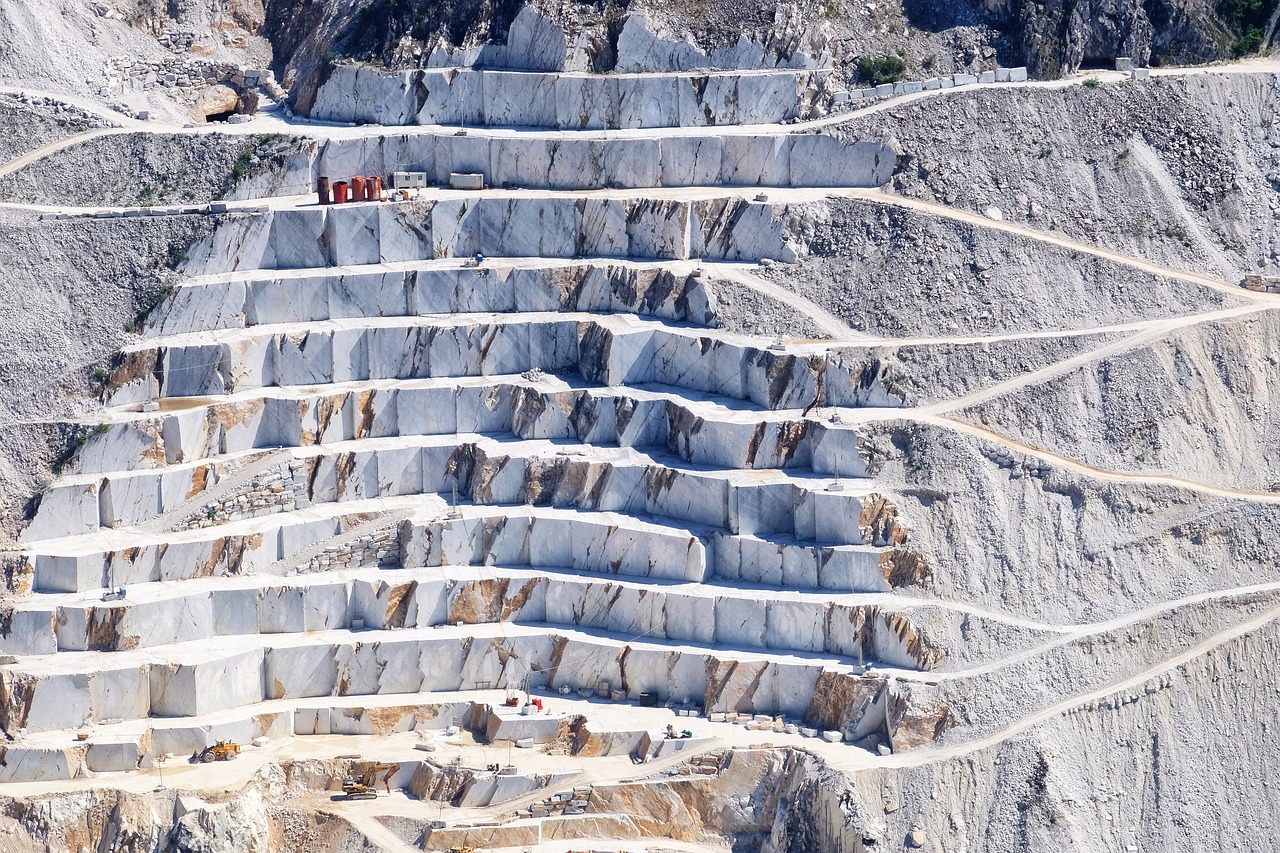
Efficient operations and strong management go a long way in making a quarry business in Nigeria successful. Quarrying activities would involve site preparation, drilling, blasting, extraction, crushing, screening, and transportation of materials. Management would ensure that these activities are done safely, economically, and in compliance with all regulatory standards.
The key aspects to be considered when managing a quarry include:
– Operational Planning: To draw up extraction schedules, equipment maintenance, and deployment of personnel.
– Inventory Management: Monitoring inventory levels to meet customer demands without excess production.
– Quality Control: Ensuring that the output conforms with the required standards in terms of industry and customer specifications.
This strong leadership combined with lean processes thus creates and sustains the profitability and operational efficiency of your quarry business in Nigeria.
Analysis of the Different Types of Quarry Equipment and Machinery
A quarry’s success is most of the time determined by the range and kind of equipment employed. Common quarry machinery includes:
Drilling Equipment
– Employed in making holes for explosives used in blasting activities.
– Examples: Drill rigs, jackhammers.
Blasting Equipment:
Used in quarrying where large blocks of rocks are broken to smaller sizes.
– Examples: Explosives, detonators.
Excavation Machinery:
Used for scooping blasted rocks and conveying them to the crushing plant.
– Examples: Backhoes, bulldozers, Haul trucks.
Crushing and Screening Equipment:
– Fixed plant-containing machines that crush extracted rock into aggregates and screen them to various sizes.
Employed in staggering of material within a quarry especially when moving from one level to the other.
Weighing Systems
– Measure products for sale or transportation in the right way.
In this regard, the focus should be made on purchasing efficient and, simultaneously, modern equipment, which would help to increase the productivity level and, thus, decrease the costs of operations in the given sphere for your quarry business in Nigeria*.
Importance of Safety and Environmental Considerations
Safety and environmental stewardship are vital for maintaining operational compliance and earning community trust.
Safety Considerations:
Some of them are checkout staff trained to avoid cross-contamination, social distancing compliance, sanitation of worker’s belongings, protection of workers from heat, and regular safety training of the workers to reduce accidents.
Personal protective measures
use of the right Personal Protective Equipment.
Providing proper checks of machines and equipment and its timely replacement.
Particular measures concerning the management of explosives.
Environmental Considerations:
Performing a study known as the Environmental Impact Assessment (EIA), to reduce the impact of the impacts of ecology.
Such measures as dust suppression.
Waste disposal control and overburden materials management.
Restoration of the quarries after their extraction.
By focusing on these aspects, your quarry business in Nigeria can gain sustainable operation that would make it over time profitable and socially acceptable.
Marketing and Sales
Overview of Marketing and Sales Strategies for Quarry Products
The quarry business has no meaning without well-planned marketing and sales strategies. Quarry products such as granite, limestone, and sand are highly sought after in construction projects. But, reaching the right customers requires a tactful and well-planned approach.
Some key strategies are:
– Direct Solicitation: Target specific highly demanded areas like construction companies, road builders, and real estate developers.
– Product Differentiation: Make a big deal about the incredibly special qualities going into your quarry product, whether it be durability, size variety, or competitive price points.
– Branding: Create a strong brand, a household name under which quality and reliability could be expected.
– Use Digital Marketing: Reach potential customers through thousands of websites, social media portals, and online marketplaces.
– Networking: Attend industry events and trade shows to connect with potential clients and partners.
Both traditional and newest marketing techniques go a long way in growing *this quarry business in Nigeria.
Analysis of the Different Types of Marketing Channels
The use of multiple marketing channels manages to reach as many people as possible for the quarry products you are selling. Common channels include:
Direct Sales:
Seek to manage contractors and businesses in a more initial and formal basis to gain engagement and better relations.
– Example: On‐site inspections and direct bargaining processes.
Distributors and Agents:
Buy from third-party distributors who have customers already in place.
– Benefits: Saves time and expands reach.
Online Platforms:
Market products on the internet by offering information on various websites such as online stores, social media, and business directories.
– Example: Selling products on sites such as Jiji or using LinkedIn for connecting to business-to-business opportunities.
Advertising:
Do TV and campaigns like billboards or airwaves for radio or do online like Google and Facebook advertising.
– Benefits: Increases brand visibility.
Referral Networks:
Remind your buyers that you are always ready for their referrals for your products.
Coupons, rebates, or any gifts that can be redeemed also inspire referrals.
Importance of Building Relationships with Customers and Suppliers
wants, needs, demands, goals, and interests are culturally rooted and are the foundation of a healthy quarry business in Nigeria.
Customers:
Establish this kind of relationship by proving the quality and timely delivery of outputs and exemplary customer care.
– Offer some kind of a club or a certain VIP card which could be given to repeat clients.
Suppliers:
– Establish a satisfying cooperation with vendors of equipment and materials to operate effectively.
Demand better conditions for its products to achieve cost reductions and have profit margins.
Community Engagement:
Communicate with the locals to win their support for your business activities.
When your business in Nigeria is ready to commit resources to develop relationships and employ multiple marketing approaches, your quarry business will be in a healthy position to grow.
Financial management and funding
Overview of Financial Management and Funding Options for Quarry Businesses:
Financial management forms a key success factor in the management of quarry business in Nigeria* and it also plays an important role in effective operations, profitability, and growth. Sources of funds that quarry businesses can seek include working capital and term finance, venture capital, subsidies, and blowback.
Analysis of the Different Types of Funding Options:
Quarry businesses can secure financing through various channels, such as:
– Bank Loans: A typical revenue source used to secure cash for the acquisition of equipment, purchase of land/property, or for expenses incurred in the day-to-day business that is usually backed by an asset.
– Equity Investment: This means business people invest to get a share in the business hence cutting on debts but having a share.
– Government Grants: They said some government programs provide grants or subsidies designed to promote mining and quarrying activities, especially in developing regions.
– Equipment Leasing or Financing: This enables organizations to order machinery on credit without straining their cash flow.
Importance of Financial Planning and Budgeting:
Control of expenses, proper utilization of resources, and profitability are decisive components that depend on financial control and budgeting in a quarry business in Nigeria. A clear example of the benefits of a well-structured budget is that it can make it easier to notice potential cost reduction possibilities, enable prompt payments to suppliers and workers, and create a comfortable cushion for covering unanticipated hurdles.
The fact, therefore, remains that your quarry business in Nigeria can only reach a full financial breakthrough and sustainable business performance once you manage the finances well and look out for other forms of funding.
Key Takeaway
Good financial management and indeed, availability of various sources of funds is strongly recommended for any quarry business in Nigeria. Acquisition of the right finances in terms of loans, equity, and/or grants facilitates operational success and growth. Similarly, and especially, maintaining reasonable and accurate financial plans and forecasting guarantees the sound use of financial resources, extent of expenses, and preparedness for various adversities that open the way to reasonable profitability and further development.
Starting a quarry business in Nigeria involves careful planning and execution. The necessary measures include doing an extensive study of the market, creating a business plan, obtaining legal licenses and permits, and acquiring a high-quality piece of equipment. Effective management of finances, safety practices, and adherence to the tenets of environmental regulations will also determine long-term success.
Mineral Water Extraction Business Operation in Nigeria
Overview of the Mineral Water Industry in Nigeria:
By and large, the mineral water industry in Nigeria has undergone tremendous growth, with more and more people demanding clean and safe drinking water. Mineral water has become a household, even business, commodity as the population density increases, coupled with awareness of waterborne diseases and an urbanizing factor.
Scope of Mineral Water Extraction into Nigeria:
The public health accomplishment of mineral water extraction is one. Safe and reliable hydration sources are provided. It contributes significantly to job creation, economic development, and diversification of the Nigerian economy with abundant water resources on shallow turns into mineral sources.
Objectives of the Guide:
This guide is meant for intending entrepreneurs who want to learn comprehensive business practices of mineral water extraction in Nigeria. Emphasis on market research, licensing requirements, operational processes, and financial management ensures that everything necessary for starting up a self-sustaining profit-generating business is made available to the reader.
Market Research and Analysis
Speculation about the Nigerian Mineral Water Market:
The Nigerian mineral water market could be defined as a rapidly evolving market, on the heels of increasing demand for safe drinking water among urbanites and rural dwellers. The market comprises bottled water, sachet water, and bulk water supplies to cater to the diverse needs of consumers.
Analysis of Demand and Supply
Population growth, increased urbanization, and health awareness drive the demand for mineral water in Nigeria. However, supply falls short of the ever-increasing demand, which makes room for new entrants into the scene.
Market Segmentation and Targeting:
The market can be segmented into packaging (bottled or sachet), consumer groups (households, businesses, and events), and geography. The highest growth markets would thus be targeting urban and low-access areas to clean water.
Competitive Analysis:
The market for Nigeria’s mineral water is competitive, with small-scale producers as well as large brands. To capture market share, these companies must therefore specialize in quality assurance, innovative packaging, cost affordability, and effective distribution channels to achieve differentiation.
Business Plan and Feasibility Study
Development of a Business Plan and Feasibility Study:
This well-detailed business plan would help guide the mineral water extraction business in Nigeria and also give it cortices with possible investors. The business plan ought to prescribe the mission, vision, goals, and strategies for growth. A feasibility study exhibits the indefiniteness of an enterprise by analysis of market demand, operational costs, and financial projections among other factors.
Definition of Business Model and Revenue Streams:
This is the normal business model for a mineral water extraction business taking spring water, treating it, putting it into bottles/sachets, and selling it to customers. Direct sales to the consumers themselves, wholesaling it to the retailers, and bulk sales to organizations and events may provide revenue streams.
Establishment of Technically and Financially Feasible Project:
Technical feasibility includes assessing the availability of water sources, technology for purification, packaging processes, and distribution capacity. Financial viability analyzes startup costs, including land, equipment, and licenses, operational costs such as labor, utilities, and maintenance, and revenues such that in the long term, an enterprise makes a profit.
Identification of Possible Risks and Mitigation Strategies:
The risks might include regulatory challenges, fluctuations in water supply, competition, and health and safety aspects of the water. These measures may include having the relevant permits, investing in well-equipped purification facilities, building trusted partnerships with suppliers, and ensuring ongoing monitoring of water to health requirements.
Licensing and Permits
Overview of the Licensing and Permitting Requirements for Mineral Water Extraction in Nigeria:
Mineral water extraction, production, and sale in Nigeria is controlled by various governmental authorities for quality assurance of the product. These regulations include those of the source of water, the environmental aspect, and on health. These laws are very important in that non-adherence to them disqualifies operations from being lawful and customers trusting them.
Importance of Obtaining Necessary Licenses and Permits:
Sometimes it may be necessary to acquire licenses and permits this is important so that your mineral water extraction business in Nigeria operates legally and is friendly to the environment for it to be sustainable in the future. It also assists in avoiding legal consequences, closure of business, and affecting business reputation. Licensing also plays a part in generating credibility since people will do business with companies that have proper licenses.
Analysis of the Different Types of Licenses and Permits Required:
Key licenses and permits include:
– Water Extraction License: Granted by the Nigerian Water Resources Institute or relevant state agencies to allow well drilling or production of groundwater or mineral water.
– Environmental Impact Assessment (EIA): Needed for evaluation of the possible impact of extraction and production on the environment, in other words, it’s needed for checking the non-negativity of impact on the environment.
– Health and Safety Certifications: These are normally released by regulatory agencies such as the National Agency for Food and Drug Administration and Control (NAFDAC) amongst others to check on the standard of the water for human consumption.
– Business Registration and Tax Identification Number (TIN): Required for legal business functioning and taxation with the Federal Inland Revenue Service (FIRS).
– Local Government Permits: Based on the area of the extraction, other permits may be needed including land use permits and or business permits.
To operate legally and without legal complications in the cutthroat Nigerian mineral water industry, it is important to obtain all licenses and permits.
Mineral Water Extraction Operations and Management
Mineral water extraction companies in Nigeria usually begin their operations by sourcing water either from springs, boreholes, or wells. The above-mentioned sources are said to be natural, clean, and most preferably, reliable. Such water is further subjected to a filtration and purification system to ensure it passes health standards. The business handles many other issues such as the location and maintenance of water sites; purification; packaging; and distribution. Coordination involves all these activities while maintaining quality, complying with regulations, and managing costs.
Analysis of the Different Types of Extraction Equipment and Machinery:
The following are some of the equipment you might need for a mineral water extraction project depending on the scale and technology: Common equipment includes:
Water Pumps and Boreholes: Used to extract water from underground sources or springs.
Filtration and Purification Systems: These include reverse osmosis systems, UV sterilizers, and activated carbon filters that remove impurities and ensure the water is safe for consumption.
Bottling and Packaging Machines: The automated machinery for bottling the water from sachets to large bottles and sealing them.
Water Quality Testing Kits: Used to test the quality of water regularly so that the water quality meets the safety standards.
Storage and Distribution Facilities: Warehouses for storing bottled water and a network of distribution for the delivery of the product to retailers, wholesalers, and consumers.
Importance of Safety and Environmental Considerations:
Mineral water extraction has to provide safety and environmental sustainability when used in organizations. The following aspects must be managed:
– Worker Safety: Management should provide requisite training to the employees to deal with the machinery, food hygiene, and handling of emergencies to prevent the development of Working conditions.
– Water Quality Assurance: Particular attention should be paid to water quality daily at all stages of extraction, purification, and packaging to avoid the products’ contamination and satisfy the public’s health requirements.
– Environmental Impact: The EIA should be conducted regularly so as to avoid over-pumping of the groundwater as appropriated in the калькулятор Adelaide melhor alvo para uma visita encyclopedia. Moreover, adequate waste disposal facilities should be available for exclusive disposal of waste materials that are produced when purifying the ingoing materials.
– Compliance with Regulations: Health, Safety, and Environment requirements as laid down by different bodies, NAFDAC, the Department of Environment, the Ministry of Environment, and the Local Authorities need to be met in line with legal requirements.
A mineral water extraction business can be profitable while ensuring that risks associated with its day-to-day operations are kept to a minimum, and the requirements of the society, as well as the environment, are met.
Water Quality and Treatment
Water quality in Nigeria directly affects the safety and health of the consumers in the bottled mineral water industry. This water should be of a strict quality standard to be potable and undergo several stages of treatment for submission before packaging to get rid of its contaminants, pathogens, and toxic substances. Regulatory agencies like NAFDAC and the Nigerian Standards Organization will set guidelines that must be followed without fail to ensure that the water is without contaminants and suitable for human consumption. The process of treatment will retain the natural minerals in the water as well, which is a basic factor that defines mineral water.
Analysis of the Different Types of Water Treatment Technologies
Many different technologies for water treatment would put mineral water under different health and sanitation requirements. Here are a few that could be considered major among them:
– Filtration: Filtration is typically the preliminary treatment step preceding any other treatment procedure. The removal of larger materials, such as sediment, clay, dirt, and debris, is achieved through filtration. Sand and activated carbon are common mediums of filtration.
– RO-this is a purification method whereby dissolved impurities, salts, and microorganisms that are harmful to humans are removed from the water, thereby giving the water complete purification. The work of Reverse Osmosis is based on the pushing of water through a treatment membrane, which is semipermeable.
– UV Sterilization: UV light is used to inactivate bacteria, viruses, and other pathogens found in the water, but not using any chemicals. Thus, the method is quite effective for the treatment of microbiologically safe water.
– Ozonation: Ozone is added as a disinfectant that kills bacteria and inactivates chemicals while providing extra protection from pathogens.
– The process of Re-mineralization and Adjustment of pH: Even after purification, it is likely that the water would need re-mineralization to balance the natural mineral content and pH adjustment before it can be made consumable.
Importance of Ensuring High-Quality Water Products
Ensuring high-quality water products is essential for several reasons:
– Health and Safety: Availability of natural mineral water without any negative effects on human health is the key duty of any water extraction enterprise.
– Brand Reputation: Maintaining safe foods, and quality products creates consumers’ confidence hence improving the company’s reputation. Positive brand image results in customer brand identification, customer brand commitment, and eventually sales.
– Compliance with Regulations: Correct water quality requirements need to be followed not only as a result of the population health concerns but also as a result of the local and international regulations. Not meeting quality will attract fines, penalties, or forfeit business licenses in the marketplace.
– Market Differentiation: In a competitive market such as Nigeria, positioning through high quality, safe, mineral-enhanced water means that it is unique from the other ordinary water sources and will be able to attract quite many health-conscious consumers who are willing to sacrifice a few bucks for quality.
It is therefore recommended that a mineral water extraction business focuses on the quality of the water being extracted and applies the right treatment technologies to produce mineral water that will meet the increasing demand for healthy water in Nigeria and gain a competitive and stable market.
Marketing and Sales
The mineral water extraction business is highly competitive in Nigeria because there are so many local and international brands competing with each other to take their part in this business. Marketing and sales strategies are critically important for differentiating oneself and winning a loyal customer base:
– Brand Positioning: Highlight the aspects such as quality and purity, health benefits, and any other attributes (like originating from natural spring sources, or mineral content) that the water offers. Depending on the target market, position your brand as trusted, premium, or affordable.
– Product Packaging: Selling points in attractive, eco-friendly, and innovative packaging can do wonders for perception. On labels, place quality claims and provide convenient sizes to meet varied consumer needs.
– Health and Wellness Marketing: With the assumption that mineral water is consumed as a health product, most potential customers will likely connect its benefits to health like hydration, detox, and better skin health; hence a strong angle that would pull health-conscious consumers.
– Promotions and Discounts: Introductory or bundled offers and seasonal sales for your target audience can lure them into trying out something new, thus creating some expectations from your brand as it enters a new market.
– Corporate Social Responsibility (CSR): Using initiatives that directly or indirectly benefit the local community or environmental sustainability practices increases brand perception.
Analysis of the Types of Marketing Channels:
There are several channels through which the mineral water product can be sold or promoted:
– Retail Channels: Include supermarkets, convenience stores, and specialty shops. Partnering with retail chains enables wider distribution and accessibility by consumers.
– Online Selling: The era in which Nigeria is fast adopting e-commerce up to now can ensure a company is here to stay by venturing online through a dedicated website or the country’s e-commerce outlets like Jumia and Konga. Be it that, home delivery or subscription histories would thrive in better sales.
– Direct Sales Entry of a direct sales force, which works best with bulk orders, such as for business events, hotels, restaurants, and offices, by doing sales directly through wholesalers, distributors, or large corporate clients.
– Social Media Marketing: These social media channels are useful for increasing brand recognition and creating new connections with young potential customers with healthy eating habits, such as Instagram, Facebook and Twitter networks. Posting interesting content, advertising, and partnering with other social media personalities are some of the ways that will encourage consumers to buy the products of the companies.
– Outdoor Advertising: Telling the truth about the company through billboards, bus stop ads, and postings at strategic places around the catchment area ensures brand awareness and attention due to the purchase of bottled water mainly done by consumers in urban areas.
Importance of Building Relationships with Customers and Suppliers
Over and above it is fundamental for every mineral water business to establish good relationships with both the customers and suppliers.
– Customer Relationships: This must be created by embracing customer relations such as excellent customer service, loyalty, and voicing their opinions. The way clients are treated in a retail outlet makes or breaks a business, through listening to their needs and making them feel valued and cared for, they will keep coming and even bring others with them.
– Supplier Relationships: Suppliers make certain that the raw materials, including packaging and filtration systems, are readily available and of good quality and also help to build good relationships with them. Another benefit of developing and maintaining a strong supplier relationship is that you can negotiate on price and this will have a knock-on effect on the profit margin.
– Distribution Partnerships: It is also significant to find suppliers who can distribute a company’s product with distributors, wholesalers, and retailers. These are some of the factors that seem to be necessary and relevant in the aforementioned relationship: timely delivery was also seen as an important aspect since the LR has to ensure timely delivery to the distributors; mutual respect; and communication with the distributors were also a key consideration.
– Community Relationships: This aspect gives a company an added advantage as supporting local community ownership, for instance, improved access to clean water, health education, or protecting the environment gives the company a better image.
Therefore, this paper concludes that, unlike other businesses, marketing mix and sales techniques used when addressing the customers and distributors are crucial in the mineral water extraction business in Nigeria. Dubai business entity’s strategic relation with all stakeholders fosters continuity, customer loyalty, and organizational profitability.
Financial Management and Funding:
Financial management is key in either the expansion or sustainability of a mineral water extraction business in Nigeria. Well-planned finances ensure smooth operations, profitability, and a long-term vision for success. There are several ways to fund such an expansion, investment in technology, and meeting capital requirements.
– Financial planning is concerned with analyzing the current state of finances and prospective future needs, followed by the preparation of a holistic plan for cost, revenue, and profit management. It is effective financial management that guarantees that a firm business stands to tide over unforeseeable economic conditions.
-Mundane cash flow management: Cash flow management seems to be indispensable in the mineral water extraction business, where upfront capital is, indeed, quite high. For example, cash is expended on equipment, production costs, packaging, distribution, and marketing costs. Most importantly, cash flow must be optimized to ensure liquidity for day-to-day expenses and long-term goals.
– Cost Management: Businesses can monitor the cost of energy, transport, and labor, to control costs and maximize profits. Economization through reduced waste, energy-efficient processes, and economies of scale are prime for healthy bottom lines.
Analysis of Different Types of Funding Options:
There are funding options available to mineral water extraction businesses with different benefits and considerations.
– Equity Financing: This is raising capital by selling equity stakes in the business. Investors buying equity shares will gain ownership stakes in the company and may expect a return from their investments in the form of dividends or capital gains. This is mostly to due businesses not using long-term financing where they would have to be indebted.
– Bank Loans: Traditional loans are a major way companies finance their work. The business typically borrows a sum from a bank that will be repaid together with an agreed interest over a number of years. Quick access to capital is provided with this mode but requires a collateral and good business plan to secure the loan.
– Government Grants and Subsidies: Government grants and subsidies form an additional incentive for Nigerian-owned businesses and the supporting sectors above or across their age categories, geographical, and income tiers. Mineral water extraction businesses can access these programs, which are mainly free for funding purposes.
– Venture Capital: Venture capitalists invest in companies with the potential for high growth in exchange for equity. This option is for businesses with innovative approaches or those wanting to scale up quickly. It allows access to quite a chunk of capital, but in return, it means sharing control and decision-making with the investors.
Crowdfunding: Crowdfunding websites such as GoFundMe, Kickstarter, or local Nigerian equivalents provide businesses an opportunity to attract many different people, often for a reward or prior access to a product. It can also help test-market the concept while generating some initial capital.
Trade Credit and Supplier Financing: Firms may therefore secure financial support from suppliers or manufacturers through a deferred payment period. An example of this happens when suppliers let a firm buy some equipment or material on credit and pay later. This makes upfront capital and cash flow management easier for a business.
Importance of Financial Planning and Budgeting
Everybody knows that financial planning and budgeting are the basic guidelines for the stable and sustainable development of business in Nigeria, but as for the mineral water extraction business, it is not so evident.
– Budgeting: A well-developed budget allows the business to provide enough resources to all needed sections, including production, marketing, staff salaries, equipment maintenance, and distribution. The systematic evaluation and modification of the budget assist in exercising financial order from time to time.
– Investment in Growth: Financial planning helps a business to find the possibilities to reinvest or expand, whether it is to extend the immediate business, improve its machinery, tools or equipment, or invest in advertising and promotion. This is mainly helpful in preparing the company for growth and is also seen to be able to help the company manage change through balancing the market.
– Risk Management: This also gives the companies the capacity to plan for risks like market volatility or costs that may arise from operations or breakdown of the supply chain. To avoid such risks business people should develop some form of financial hedges which may include petty cash balances, overdrafts, or short-term loans.
– Profitability and Sustainability: Budgeting makes it easier for the business to learn where the most money is spent and in the process make plans on how to allocate resources better. This can lead to higher profit levels, and in turn, assist the companies to continue competing in the marketplace.
Therefore, the management of financial resources and sourcing appropriate modes of financing perquisites are inevitable for the establishment and sustenance of a mineral water extraction business in Nigeria. Financial strategies include being able to plan, budget, and secure/properly manage funds required for the growth, sustenance, and management of a business so that it can run through the hardships of the existing business environments.
Conclusion
It has been observed that there is a good prospect for a mineral water extraction business but it is dependent on planning, legal compliance, and quality assurance. Here’s a recap of the key considerations to ensure your business is set up for success
Market Research: Analyse the demand side, consumption patterns for mineral water and competition. It will help you determine where there are niches available for your brand’s operations in the market.
Licensing and Permits: Get a license and permit from the regulatory agencies of the country such as NAFDAC, SON, and the Ministry of Water Resource. Proper legal and environmental requirements must be met in order to never encounter any problems.
Water Quality and Treatment: It is very important to make certain that the water supplied to you is of the highest quality. Ensure that you use current technology when treating water, through the use of reverse osmosis and UV filtration to be sure of the quality of the water you are using in your product.
Equipment and Operations: Order or acquire equipment such as water purification and treatment, water bottling, and packaging equipment. More to the point, for quality to be sustained, and for costs to remain controlled, operations have to be efficient.
Financial Management: Financial management and capital acquisition remain key success factors. That is why cost control, potential risk evaluation, and funds acquisition remain critical to maintaining operations and generating profit, respectively.
Marketing and Sales: It is therefore important to create a good market image to create brand awareness. This is because the use of both offline and online communication tools will enable you to target your customers and extend your customer base.
Sustainability and Responsibility: The management should promote corporate sustainability benchmarks in an effort to reduce adverse effects on the environment. Such as the use of biodegradable packing, standard ways of gaining water, and efficient use of energy.
Focusing on these, you will be able to overcome the obstacles of starting a mineral water extraction business in Nigeria effectively with progressive growth and profitability.













There are no comments