


Launching and Apparel Production Business in Nigeria
Get started
Call-to-action
Tel: (+234) 802 320 0801, (+234) 807 576 5799)
E-Mail: enquiry@mocaccountants.com
Office Address: 5, Ishola Bello Close, Off Iyalla Street, Alausa, Ikeja, Lagos, Nigeria.

Introduction
The industry is such that starting an apparel production company in Nigeria opens tremendous opportunities for a vibrant growing industry, spurred by an ever-energetic fashion-hungry populace. The traditional African styles that blend into global modern styles make Nigeria a unique company in the fashion horizon. Entrepreneurs seeking to achieve this will begin to have an ever-growing market and contribute to the building of the economy in the country.
Launching an apparel production company in Nigeria has become highly important on all counts. It is one of the most critical avenues for job creation, economic diversification, and cultural preservation. Produce garments locally, reduce importation dependence, grow the related industries, such as textile, and eventually pave the country’s way toward joining the rest of the world in the global fashion market.
As we all know, starting an apparel production company in Nigeria needs a clear roadmap. This guide has been prepared to help you:
- across the Nigerian apparel industry with confidence.
- on the regulatory compliance requirements necessary to establish your enterprise.
- develop a sustainable business model that suits the socioeconomic dynamics of the Nigerian market.
- establish the groundwork of a competitive, thriving apparel production enterprise.
Follow us in specifying how to make your entrepreneurial dreams a reality!
Market Research and Analysis
Overview of the Nigerian Apparel Market
Commencing an apparel production business in Nigeria begins with understanding the intricacies of the local market. The Nigerian apparel market is agglomerative and varies between styles and preferences to meet consumer needs as it covers different aspects of clothing-from traditional attires such as Ankara and aso-ebi to contemporary ready-to-wear outfits. It promises business opportunities to reach the spectrum of the population and in between these traditional and contemporary forms, the emerging strength of global trends and the increasing numbers of local fashion designers have made the market more attractive.
Demand and Supply Analysis
The access to demand and supply of garments in Nigeria is determined by the youthful, fashion-conscious population and rising urbanization, but the supply side continues to underdevelop. Thus, more and more of these products are imported than locally produced. Through this, any entrepreneur would be able to launch an apparel production company in Nigeria and meet the gap in what Nigerian consumers lack high-quality locally made clothing.
Market Segmentation and Targeting
The Nigerian apparel market can be segmented into different segments such as:
Demographics: Age, gender, income level.
Geographics: Urban and rural areas, regional preferences.
Psychographics: Fashion enthusiasts, cultural preservationists, or eco-friendliness buyers.
This way, a business understands how to segment its customers and thus directs its marketing efforts toward particular audiences, offering specialized products that appeal to them.
Competitive Analysis
The factor of competition cannot be ignored when starting an apparel production industry in Nigeria. This includes existing brands, independent designers, and imported apparel dealers. To penetrate the market, one must:
– Focus on quality with affordability.
– Emphasize unique selling features such as cultural relevance or sustainability.
– Build a strong customer relationship through excellent services and branding.
Market size and growth
Nigerian apparel market is valued in billions of naira and continues to grow every year. It has to do with factors like youthful population, increase in disposable income, and influence from social media. With all of these, it means that an entrepreneur trying to enter the apparel manufacturing business in Nigeria has an opportunity. It means that he can align his product offer with what currently happens in the market.
Target Market
Identifying and knowing your target market goes with:
- Middle-class target customers looking for trendy yet affordable clothing.
- Youthful youth with a high level of trend sensitivity and exposure from around the world.
- Corporate professionals seeking corporate wear.
- Events attendees seeking traditional wear and/or custom-made attires for that special day.
Due diligence in market research and analysis will give businesses an upper hand in addressing Nigerian apparel market penetration efforts and maximizing the chances of succeeding in that venture.
Competitors
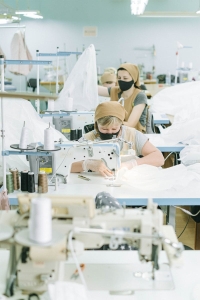
Understand the competition. This is one of the most crucial steps you have to take when setting up an apparel production business in Nigeria because the Nigerian apparel industry has local brands, international retailers, independent designers, and all kinds of competition:
Homegrown Brands
Recognizable within and somewhat beyond Africa, Nigerian brands indeed manage by dishing out high-quality product lines and, at the same time, offer authentic cultural value, at the same time giving a contemporary feel and air. Their target market usually belongs to middle-high-income classes:
– Deola Sagoe: Producing luxurious design by blending both African heritage with today’s fashion.
– Mai Atafo: Custom-made and wedding attire.
Competing strategy: Selling cheap, high-quality products to larger sections of the market, that is, middle class.
Fast-Fashion and International Brands
Zara, H&M, Levi’s, and other global companies are all indirectly competing with the local economy. Such brands offer imported clothing and make good sales within Nigeria. They promise younger, trendy, and enthusiastic consumers a variety of clothing at very friendly prices.
Competing strategy: Sell limited items made in the country at speed and at great prices that emphasize cultural attachment and also support the Nigerian economy.
Imported Ready-to-Wear Markets
There is a flood of cheaper imported clothes into Nigeria from states such as China, Turkey, and India, pouring into local markets. These imports serve low-price-buying customers denied an opportunity by expensive and yet quality endurable products.
Competitive Strategy: Market the superior quality and endurable, tailored fitting attributes of locally produced apparel.
Independent Designers and Tailors
Most of the apparel markets in Nigeria are made up of bespoke designers and tailors who make clothes for individuals. These ventures are traditionally entrenched in the culture of tailoring but are limited in scaling up.
Competitive Strategy: Deliver semi-customized products through efficient production processes characterized by affordability and personal touch.
Online Fashion Retailers
E-commerce platforms like Jumia and Konga are no less; even much smaller Instagram-based fashion retailers are mushrooming highly, especially among youths computerized in technology. The competition has texture, convenience, and access over quick delivery in the shop.
Strategy to Compete: Establish an online forte and demonstrate your products through the corresponding introduction to customers.
–Strategies for Competitive Advantage
Thus standing out in this competitive world:
– Unique Selling Propositions (USPs): Speak on the material sourcing in the continent; it can even include culture and sustainability.
– Innovate: Design uniqueness combined with high-quality production processes and you’ll land the good ones.
– Technology: Use digital marketing, e-commerce platforms, and supply chains for visibility extension and increased accessibility.
– Brand Loyalty: Touch the customers well with super services, good product quality, and consistency.
With close competitor analysis as well as the realization of unique strengths, a credible niche can be created in the Nigerian apparel production market.
Business Plan and Feasibility Study
You need a well-thought-out business plan and a properly conducted feasibility study to kick-start an apparel production venture in Nigeria. This part makes you set clear goals and have a way of doing things, as well as the financial and technical feasibility of the intended venture.
Developing a Business Plan and Feasibility Study
A business plan for the use of apparel production is an important part of structuring. It has a blueprint for operations; it also attracts investors or funding bodies. A feasibility study is a market assessment to show the possible performance and profitability of your venture.
Key sections to be incorporated include:
- Executive Summary: This should encapsulate the brief highlights of the apparel production business, including the objectives, products, and target market.
- Market Analysis: This section covers the current trends, growth potentials in the Nigerian apparel industry, and customer choices.
- Operational Plan: The production process should include raw materials, factory layout, and equipment.
- Financial Projections: Under this head, give estimates of startup costs, revenue streams, profit margins, and break-even analysis.
Defining the Business Model and Revenue Streams
Your business model provides a vehicle for how your apparel production business creates, delivers, and captures value in the Nigerian market. Some major factors include:
– Types of Production: You must choose either ready-to-wear, bespoke tailoring, or hybrid methods.
– Target Market: Who will use it (youngsters, professionals, or fans of traditional wear)?
– Distribution Channels: Which would you go direct-to-consumer sales, wholesale, or joint ventures with retailers?
– Revenue Model: In what ways will you make your income-separate revenues from custom orders, retail sales, and bulk manufacturing contracts?
Assessment of the Technical and Financial Viability of the Project
For sustainability assessment consider:
Technical Viability:
– Skilled labor.
– Raw material availability and machine access.
– Legal compliance.
Financial Viability:
– Initial investments in equipment, raw materials, and construction.
– Drainage plus profit expectations.
– Including loan, grant, or equity investment sources.

Identifying Possible Risks and Ways to Deal with Them
Early risk identification protects the business against surprises due to unforeseen events. Typical risks are:
– Economic Risks: The material costs will fluctuate due to changes in currency values or inflation.
– Mitigation: Demand fixed price contracts with suppliers.
– Operational Risks: Machinery failure or slowed production.
– Mitigation: Schedule regular equipment maintenance and build in some contingency time in production run cycles.
– Market Risks: Competitors and customer preferences.
– Mitigation: Continuous innovation and keeping pace with trends in the market.
– Regulatory Risks: Non-compliance with gold standards-industry.
– Mitigation: Before operations begin, acquire all permits and licenses as needed.
Licensing and Permits.
Necessary licensing and permits are critically important for starting an apparel production company in Nigeria. The legal requirements will be met in operations, hence building the confidence of stakeholders and avoidance of regulatory penalties.
Overview of Licensing and Permitting Requirements for Apparel Production in Nigeria.
The various businesses in apparel production in Nigeria, as all others in the manufacturing industry in the country, will be subject to several regulatory requirements. The following are some basic licensing and permitting requirements for:
Business Registration: All businesses engaging in apparel production are required to register with the Corporate Affairs Commission (CAC) to obtain legal recognition before commencing any production activities.
Tax Identification Number (TIN): The number is generated by the Federal Inland Revenue Service (FIRS) and is compulsory for tax obligations.
Environmental Impact Assessment (EIA) – To ascertain the effect of the production on the ecology or environment.
Standards Organization of Nigeria (SON) Certification; ascertaining that apparel would be quality manufactured and safe with respect to national standards.5. Local Government Permits: depending on the area of operation within a particular jurisdiction, additional permits might be required.
Importance of Obtaining Necessary Licences and Permits
License and permits are necessary for the smooth operation of your apparel production business in Nigeria. They provide the following benefits:
– Legal Authorization: They legalize your business as a lawful entity.
– Access to Funding: Most financial institutions will not give loans without proof of compliance.
– Market Access: Various certifications like the SON approval will help to penetrate the local and international markets.
– Stakeholder Confidence: It shows compliance and credibility to suppliers, customers, and partners.
Analysis of Types of Licenses and Permits Available
Business Operation Licenses: These include CAC registration and a TIN, which are essential for every corporate operation and tax compliance.
Environmental and Safety Permits: That includes EIA and permits coming from the Ministry of Environment for sustainable practices.
Manufacturing Certification: Applying SON certification for quality in apparel products.
Trade Licenses: These are necessary for importing raw materials or exporting finished products.
Documentation and Licensing Procedure for Setting Up an Apparel Manufacturing Business in Nigeria
Proper documentation and licenses form the very foundation of compliance and legitimacy for your apparel production business in Nigeria. The following paragraphs are the step-by-step guide concerning documentation and licensing procedure:
Step 1: Business Registration.
– Register Your Business Name: Submit your proposed business name to the Corporate Affairs Commission (CAC). Upon approval, complete the registration process.
– Required Documents:
– Completed application form
– Valid means of identification for business owners
– Passport photographs of directors
– Articles of Association (for limited liability companies)
Step 2: Tax Identification Number (TIN) Application
– Obtain TIN from the Federal Inland Revenue Service (FIRS). This will require filing taxes and financial transactions.
– Required Documents:
– CAC registration certificate
– Application letter
– Proof of address.
Step 3: Environmental Impacts Assessment (EIA)
– You should conduct an Environmental Impact Assessment (EIA) that investigates the environmental implications of your production activities. This is needed from the Ministry of Environment.
– Documents Needed:
– EIA application form
– Proposal of the project
– Site plan
Step 4: Standards Organization of Nigeria (SON) Certification
– Apply for certification from SON so that your apparel product complies with Nigerian quality standards.
– Required Documents:
– Product sample
– Manufacturing process details
– Business registration documents
– Proof of factory location
Step 5: Local Government Business Permit
– You have to procure a local government business permit where you will situate your factory.
– Required Documents:
– Location Plan of Factory
– Registration documents for business
– Proof of environmental compliance.
Step 6: Specific Licenses to Industries
– Depending on the area of production, additional permits could be required relating to issues such as labor laws, safety standards, or export regulations.
– Example Documents:
– Employees’ health and safety measure proof
Export registration (if products are exported).
Procedure for License Acquisition in General
- Required Licenses: Study the licenses required for your business based on the size and locality of the business.
- Documentation: Gather all necessary documentation as required for each license.
- Application Submission: Submit application forms to the relevant authorities such as the CAC, FIRS, SON, and local government offices.
- Site Inspections: In some cases, such authorities may visit the site for inspections to determine compliance with the application.
- Fees Payment: Pay all application and permit fees.
- Issue Licenses: The license issue follows approval, allowing your business to commence legal operations.
Factory Design and Layout
An Overview of Factory Design and Layout for Apparel Production
Harmonizing your factory design and setting its interiors goes a long way to ensure good operation, high productivity, and safety for the employees. Thought-out factory design makes for easy movement of materials, elimination of delays, and optimized workspace utilization to maximize productivity for apparel production in Nigeria.
Analysis of Types of Factory Layouts
- Product Layout:
– Product layout is mainly for type product lines, and it comprises a sequence arrangement of machinery and workstations.
– Most suitable for mass production of a similar type of garment.
- Process Layout:
– Workstations are grouped according to a function concerning cutting, sewing, and packaging.
– Best for different types of apparel products with their specific process.
- Cellular Layout:
– Product and process are combined layouts and also can be more than one cell.
– This is very suitable for flexible small-batch production.
- Fixed Position Layout:
– The item remains in one fixed position while a worker or equipment has to come to the site.
– Specially adapted for either specialized or custom-made clothing.
Safety and Environmental Consideration
– Workplace Safety: Fire exits, sufficient ventilation, and ergonomic workstations to reduce operational risks.
– Environmental compliance: Waste management systems and energy-efficient lighting and machines are key elements in decreasing the environmental footprint.
– Compliance with Local Laws: Follow the safety and environmental regulations in Nigeria to prevent legal complications and penalties.
Equipment and Technology
Equipment and technology overview for apparel production
This includes the varieties of different machines which are required by a manufacturer in the various stages of garment manufacture, from fabric cutting to finishing. This would enhance productivity and quality.
Analysis of the Different Types of Equipment and Technologies Available
Cutting Equipment:
– Manual Cutting Tools: To be used in small-scale production.
– Automatic Cutting Machines: For large-scale operations with precision and speed.
Sewing Machines:
– Lockstitch Machines: Common machine applicable for general sewing.
– Overlock Machines: Applicable for edge finishing and sewing.
– Special Machines: Machines for embroidery, buttonholes, or bar-tacking.
Pressing and Finishing Equipment:
– Steam Press Machines: Required to give the final touch to garments.
– Packaging Machines: Used for folding, bagging, or labeling products.
Software Solutions:
– CAD (Computer-Aided Design) for apparel design and pattern making.
– ERP (Enterprise Resource Planning) Systems: For inventory management, production schedules as well as supply chains.
Importance of Choosing the Right Equipment and Technology
– Efficiency: Production time is reduced and less human error occurs.
– Scalability: Equipment is selected under future business progress and increasing demand.
– Economic Feasibility: Connect the high initial cost with long-term savings of durable and energy-efficient machinery.
– Compliance: The equipment should comply with the industry-relevant standards and regulations of Nigeria.
Management of Raw Materials and Supply Chains
Overview of Raw Materials Associated With Apparel Production
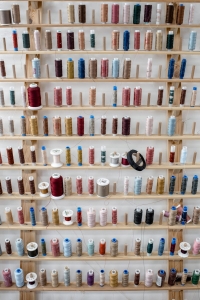
Production of apparel involves several raw materials, which are used in different combinations to produce merchandise. Examples of raw materials are: – Fabrics: Natural fabrics (cotton, polyester, silk, wool, denim, and blends). – Threads: Matching or contrasting with different strengths for sewing and finishing purposes. – Trims: buttons, zippers, hooks, lace, and elastic bands. Accessories: labels, tags, and other ornamental items such as sequins and beads.
Analysis of Different Types of Raw Materials and Their Sources
Fabrics:
– Natural fibers are sourced mainly from agricultural products like cotton farms or silk from silkworms.
– Synthetic fibers, as its name implies, are manufactured from petrochemicals and supplied commercially from individual suppliers.
– Blended fabrics contain combinations of natural and synthetic fibers to obtain their respective positive properties.
Trims and Accessories:
– Very basic trims and embellishments are often available from local manufacturers.
– Imported might be essential for high-end and specialized products.
Packaging Materials:
– All finished goods should be packed in poly bags, cardboard boxes, and tags.
Benefits of Supply Chain Management and Logistics
– Reliability: It provides a continuous supply of raw material so as not to halt the production process.
– Cost Management: It brings cost reduction in procurement through strategic sourcing and bulk purchasing.
– Quality Assurance: Maintain the quality of the product through supplier standards.
– Efficiency: Less wastage and transportation costs through streamlined logistics.
Production Planning and Control
Production Planning and Control Overview in Garment Production.
Production planning generally entails processes in which schedules are set and resources allocated to achieve production targets, and control ensures whether the plan is effectively executed.
Criticism of Different Types of Production Planning and Control Systems
. Make-to-Order System:
The system is the method of production in which garments are produced after customer orders are received.
-Most of such systems produce very limited stocks, though may lead to long lead times.
Make-to-Stock MTS
These are systems that manufacture standard garments for stock based on demand forecasts.
They ensure availability of the products but risk overproduction.
Just-in-Time (JIT)
Manufactures only what is required, when it is required. Waste is reduced of course, but it needs proper coordination with suppliers and production teams.
Lean Production Systems.
Systems that concentrate in eliminating wastes and maximum resource efficiency.
Importance of Ensuring Efficient and Effective Production
- Timely Delivery of Products: Planning is put in place to ensure that the products reach customers within the promised time.
- Cost Control: It strives to minimize wastage of the raw materials alongside labor.
- Quality: Through continuous feedback, the striving for quality is maintained at production levels.
- Scalable: Effective control systems allow adjustments to cater for business expansion with time or according to seasonal demand.
Types of Launching an Apparel Production Business in Nigeria
Small Scale Production
– Description: This refers to setting up a business on a small scale with a limited resource base, specifically focusing on certain niches or small-scaled pieces such as customizing and making uniforms for schools and organizations.
– Advantages: Lesser startup costs, personalization of service delivery, and faster response to market changes.
– Constraints: Limited production volume and higher per-unit costs.
Medium-Scale Production
– Description: Attempts to reach market areas on a wider basis through investments in moderate capacities of equipment, staff, and production setups. Medium-scale businesses are in the garment production sphere, catering to direct local major retailers, some wholesalers, and even smaller export operations.
– Advantages: Ability to reach larger markets; ability to meet bulk orders; better economies of scale than small-scale production.
– Constraints: Larger operational complications and higher initial investments.
Large Scale Production
-Description- Full-fledged establishment of a manufacturing unit to produce garments in mass quantities, commonly for retail chains or external markets. This requires huge investment in tons of machinery, technology, people’s contributions, etc.
Advantages: It is a matter of high production efficiency, low cost per unit, and opens domestic and international access.
Constraints: High costs of setting up, stringent regulations, and the need for a robust management system.
Custom Clothing Design and Production
– Overview: It seeks to bespoke fashion in custom designs made specifically for the individual needs of clients or particular themes; for example, bridal wear or traditional outfits.
– Advantages: High profit margins, strong customer loyalty, and potential for branding.
– Challenges: It involves time-consuming processes and dependency on skillful designers and tailors.
Private Label Manufacturing
– Overview: Manufacture clothing under the brand name of another company. The private label manufacturer manufactures while the client manages branding and marketing.
– Advantages: Continuous requirements from clients, limited marketing, and steady income stream.
– Disadvantages: Reliance on contracts with the client and limited brand recognition.
Export-Oriented Garment Production
– Overview: This refers to production-oriented with respect to export markets, and usually the major production units are scaled up so that the output meets international standards and requirements.
– Benefits: Access to foreign exchange, interaction with the global trend, and increased profitability.
– Challenges: Stringent quality control and observation of international standards and very fierce competition.
E-commerce Fabrication of Apparel
– Overview: Production and selling are defined directly to a customer through online portals. The major focus has been on small-batch manufacturing and the leanest logistics possible.
– Advantages: Direct reach to consumers in the market, lower marketing costs, and scalability.
– Disadvantages: Very high competition in the digital space and relying on solid online marketing.
Production of niche apparel
– Overview: The focus here is on a particular market, for example, eco-friendly, sports, maternity, or ethnic apparel.
– Benefits: A strong brand identity; loyal customers ability to have high margins on products that are unique.
– Challenges: Market size is limited, and specialized material costs are likely to increase.
Franchise Model Clothing Manufacturing
– Description: The franchise undertakes operations under a particular brand and business model of a successful apparel company and its products and services.
– Advantages: Lesser startup risk, widespread branding, and operational assistance from the franchisor.
– Disadvantages: High franchise fees and poor operational flexibility.
Hybrid Model (Custom + Mass Production)
– Description: It comprises custom garment production for premier clients and standard mass production for retail or wholesale clients.
– Advantages: More ways of getting income from and accessing the market.
– Disadvantages: Effective management with a balancing act of the dual operations models.
Choosing the Right Type
Depending on the target market, financial depth, and long-term vision, each business model works best. Starting small and then expanding as the demand and market develop in Nigeria’s apparel industry will be the best approach for many entrepreneurs.

Apparel Products
Casuals
– Examples; Tee shirts, jeans, shorts, sweatshirts, and casual tops.
– Audience: Casual users men, women, and children.
– Market Insights: Much demanding since it’s versatile and comfortable.
Formal Wear
– Examples include: Suits, dress shirts, blouses, skirts, tailored trousers, and gowns
– Audience: Professionals, corporate employees, and individuals attending formal events.
– Market Insight-Tailored or ready-to-wear made for most corporate and event-specific needs.
Sports and Active Clothing
– Examples: Tracksuits, gym shorts, yoga pants, sports bras, jerseys
– Audience: The athletes, fitness enthusiasts, and sports teams
– Market Insight: As one of the most upbeat trends in terms of health and fitness, there is a growing demand for this sector.
Traditional Clothing as Well as Ethnic Attire
– Examples include the following: Ankara outfits, agbada, buba and iro, kaftans, and other ethnic attire.
– Target Audience: For those who celebrate cultural events or prefer traditional wear every day.
– Market Insight: This is a major market in Nigeria, where culture pride and social events drive demand.
Outerwear
– Examples: Jackets, coats, hoodies, blazers, and cardigans.
– Target Audience: for seasonal wearers and people from cooler climates.
– Market Insight: Steady demand during rainy and harmattan seasons in Nigeria.
Children’s Clothes
– Examples: Rompers, school uniforms, baby clothes, and play outfits.
– Target Audience: infants, toddlers, and school-aged children.
– Market Insight: The market is always active as children easily outgrow clothes.
Workwear and Uniforms
– Examples: Scrubs, chef coats, safety overalls, and corporate uniforms.
– Target Audience: Companies, schools, and institutions require uniformity.
– Market Insight: A niche but growing market and a good opportunity for bulk production.
Luxury and Designer Wear
– Examples: High-end dresses, custom suits, and branded attire.
– Target Audience: Affluent individuals and fashion enthusiasts.
– Market Insight: There is an increasing demand amongst the economically active population in urban space.
Lingerie and Sleepwear
– Examples: Nighties, sleepwear, brassieres, and panties.
– Target Audience: Those looking for comfort and functionality-women, men.
– Market Insight: Increasing awareness on comfortable, fashionable innerwear.
Eco-Friendly and Sustainable Apparel
Examples: Organic cotton shirts, recycled polyester jackets, and bamboo fabric articles of dress.
Target Audience: Environment-conscious consumers.
Market Insight: A growing market segment whose consumers are emphasizing sustainability.
Streetwear-
Examples: Hoodies, graphic tees, sneakers, cargo pants.
Target Audience: Urban youth and trendy lovers of fashion.
Market Insight: Mostly interested among the younger generation, based on the global trend.
Maternity Wear –
– Examples include maternity dresses, nursing tops, and stretchy leggings.
– Target Audience: Pregnant women and nursing mothers.
– Market Insight: A relatively stable rate of demand because of a specific and repeat customer base.
accessories
-Hats, scarves, gloves, and belts, to mention a few.
-Consumer Groups: All, because these can be impromptu parts of apparel.
-Market Insight: Value-add to core apparel lines and enhanced offerings towards style.
Seasonal and Festival Wear
-Christmas costumes, Eid and Ramadan outfits, and wedding attire, for example.
-Target Audience: Consumers celebrating certain holidays and/or events.
-Market Insight: Demand during the festive season is that there is often room for unique designs.
Customized Clothing
-Examples include personalized t-shirts, monogrammed jackets, and specific event wear.
-Target Market: Individuals and corporate clients seeking specific customization.
-Market Insights: Rising trends in gifting, event-related and branding.
Apparel Industry and Regulation Guidelines in Nigeria
The dynamic Nigerian apparel industry offers Nigerian entrepreneurs many opportunities to make their contributions to the economy while doing business within a well-defined regulatory framework. Regulation ensures that all organizations undertake their business operations legally and ethically.
Regulatory Bodies
The nation’s many agencies that regulate the industry as a whole are a lot in number among them. They include the following:
– Corporate Affairs Commission (CAC): Registration of businesses.
-Standards Organisation of Nigeria (SON): Quality control products.
– Federal Inland Revenue Service (FIRS): Tax management on businesses.
– Nigerian Export Promotion Council (NEPC): For businesses into apparel exportation.
Business Registration and Licensing
To go legally into the apparel production business, you should:
– Register your business name with the CAC.
– Ascertain the applicable form of business (i.e. sole proprietorship, partnership, or limited liability company).
– Obtain a Certificate of Incorporation.
– Acquire a Tax Identification Number (TIN): Required for tax compliance.
– Apply for specific licenses:
– Environmental Impact Assessment Certificate (if producing on a large scale).
– Export license (for international sales).
Quality and Safety Standards
The quality standards needed for the manufacture of garments to protect consumer health and safety are the following:
– Fabric Safety: Non-toxic, friendly to skin, and fire-resistant in a specific use condition.
– Product Labeling: Information on fabric composition, size, care, and origin.
– Workplace Safety: Follow the laid-out Occupational Safety and Health (OSH) standards for factory workers, which include ventilation, machinery safety, and ergonomics.
Labor Laws and Employment Regulations
Essential compliance with labor laws for sustainability operations, minimum wage-take heed of Nigeria’s minimum wage law for every human engaged by the company and worker rights-provision of workplace safety, reasonable hours, and non-discriminative.
Health and Safety-The employee should be provided by the employer with personal protective equipment (PPE) and health insurance where applicable.
Environmental Adherence to the Laws
Minimizing the effects of the environment:
Disposal of waste like proper disposal of scraps from fabric, dyes, and any other by-products.
Incorporation of eco-friendly fabrics and production processes.
Pollution control makes sure there are emissions and effluent international standards compliance.
Intellectual property rights
Whether you want to keep your designs secret or brand identity, statements like:
– Trademark registration: To protect your logos, brand names, and custom designs;
– Copyright: Safeguard your original patterns and design sketches.
Regulations on import-export
For those that deal with international markets:
– Import guidelines: Ensure that all imported raw materials comply with Nigerian customs regulations:
– Export documents: Certificate of origin and requirement of the country of destination.
– trade Agreements: Take advantage of regional trade agreements such as the African Continental Free Trade Area (AfCFTA) for better market access.
Ethical business undertaking:-
-The definite advertisements which result into invoking reality and not causing misleads-
-Return and Refunds. Straight policies should be enacted in concern with defective and unsatisfactory products.
-Consumer Complains. Active grievances system must be there through which all complaints do get addressed timely.
Anti-Counterfeit Measure
Fight Counterfeit-
Foster and Mark Integrity with the Brand:
– have an authentication label or QR code for your products.
– Keep an eye out for the fake replicas of your designs in the market.
– Report the incidence of counterfeiting to regulatory authorities.
Continuing Compliance and Monitoring
Regular review of your compliance with proceeded legislation and regulations will be:
– Utilizing the legal adviser with experience in apparel industry practice.
– Attendance to SON or NEPC-conducted workshops and seminars.
– Execution of periodic audits of your business practices.
Such regulatory guidelines make sure that your clothing production business is legal and enhance the credibility in the brand and additional trust among consumers. It will also strategically position your business for growth in the highly exciting apparel industry of Nigeria.
Assurance and Quality Control
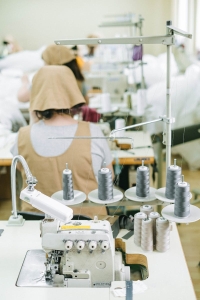
- Quality Control Overview and Assurance in Apparel Production Quality control and assurance play a very important role for any type of apparel production or business. These ensure that products conform to customer expectations, industrial standards, and regulatory requirements. The incorporation of systematic quality checks will minimize wastage, improve customer satisfaction, and create lifetime trust in the brand.
- Types of Quality Control Measures
– Pre-Production Quality Checks:
– Check raw materials such as fabrics, threads, and accessories for defects or inconsistencies.
– Verify that the supplier meets the agreed quality standards.
– In-Production Quality Checks:
– Monitor every single stage of production to be done to specifications.
– Utilization of sample test for measurements, stitching accuracy and color matching.
Post-Production Quality Checks
– End-product inspections for tear, stain, and wrong labeling.
– Durability testing through stress and wear tests.
– Statistical Quality Control
– Utilization of data and measurements to observe trends and improvement opportunities in production processes.
- Why Ensuring High-Quality Apparel Is Important
– Creates customer trust and loyalty.
– Saves on returns and complaints, hence reducing costs.
– Improves brand image, thereby making it competitive with the market.
– Countries international standards for export.
– Minimizes environmental waste since products are durable and reliable.
Product Development and Design
Analysis of Product Development and Design in Apparel Production
Product development and design are the phenomenally complex imaginative and strategic practices of the generation and creation of clothing items according to market demand and brand identity. This stage involves concept ideation, development of prototype samples, and testing for the actualization of the new idea and functional product.
. Types of Apparel Products
– Clothing:
– Casual wear (e.g., t-shirts, jeans, dresses).
– Formal attire (e.g., suits, gowns).
– Sportswear (e.g., activewear, gym wear).
– Outerwear (e.g., jackets, coats).
– Accessories:
– Hats, scarves, belts, bags, and footwear.
– Specialized Items:
– Uniforms, cultural attire, or maternity wear.
Importance of Product Testing and Quality Control
– Assuring Safety: Factors of safety are met. Fire resistance can be one of the attributes for specification in children’s clothing.
– Functional validation: Proves whether the product is engineered to function as it is intended; waterproof jackets should repel water effectively.
– Durability Improvement: Stress testing verifies that the fabric and stitching have been subjected to rigorous demands of wear and tear.
– Catering to Customer Needs: Ensuring that the design meets both aesthetic as well as functional expectations.
– Assurance of Regulatory Compliance: Ensures that the products meet countries’ and international requirements for trade compliance.
Reasons for Establishing Relationships with Customers and Suppliers
– Customer Relationships:
– Helps build loyalty through personal interaction and feedback.
– Encourages customers to come back themselves, even making one or more positive suggestions.
– Supplier Relationships:
– Guarantees continuous supplies of quality raw materials.
– Enables better negotiations on price and terms which improve the profitability advantage.
Financial Management and Funding
Financial management deals with developing a concept for the sustainability and profitability of an apparel production business. Some of the functions include budgeting, controlling expenses, cash flow management, and profit reinvesting. It is the key factor behind establishing businesses and scaling them up to meet the minimum requirements for carrying out activities such as factory setup, equipment, and human and marketing activities.
Types of Available Funding Options
– Self-Funding:
– Saving or contribution from family members or friends.
– Bank Loans:
– Loan facility for businesses offered by commercial banks with terms considered applicable for startups.
– Government Grants and Programs:
– Such programs include the Nigerian Youth Investment Fund (NYIF), which targets entrepreneurs in the apparel sector.
– Angel Investors and Venture Capitalists:
– Private individuals or companies providing capital in exchange for equity or returns.
– Crowdfunding:
– Crowdsourcing for capital through platforms such as GoFundMe and Kickstarter.
– Microfinance Institutions:
– Small loan amounts designed for the small-scale entrepreneur.
Importance of Financial Sustainability and Viability
– Stability: To enable uninterrupted operations which are not affected by a shortfall in finance.
– Potential for Growth: To provide resources for scaling production, investment in new technology or making an entry into new market segments.
– Investor Confidence: Attracts stakeholders in the company through an accolade of sound financial management.
– Maximization of Profits: The assurance that revenues exceed costs and thus maintain profitability in the long run.
Best Practices for Entrepreneurs in the Apparel Production Business**
Conduct Market Research and Identify Your Niche.
Understand the preferences, trends, and competitive dynamics in Nigerian apparel. Unveil market gap opportunities to differentiate your brand.
Never Compromise on Quality and Innovation
Invest high-quality raw materials and employ well-skilled manpower. Thus, you need advanced technology and creative design to produce very innovative apparel.
Build a Reliable Supply Chain.
Partner with reliable suppliers who will ensure that materials will be always made available. Make the logistics fast.
Be Branding and Marketing.
Build a solid brand and get customers to associate with your brand on the digital platforms. Use online visibility such as social media and influencer collaboration for much exposure.
Manage Financially
Cash flow should be measured, have some contingency funding and look into diverse funding options. Invest cash profits back into profitable growth or better operations.
Comply Regulations and Promote Sustainability
Obtain licenses, comply with labor, safety, and environmental laws. Become an eco-friendly business, and extend to consumers the brand experience from sustainability.

Challenges and Opportunities in the Business of Apparel Production in Nigeria
Ineffective Power Suppl
– This, in turn, leads to increased production cost and stagnation of work.
– An entrepreneur is forced to spend on different sources of energy
Expensive Raw Material Costs
– To get good fabrics and accessories is expensive, whether sourced locally or imported.
– Adding to that, you have the import duties and varying foreign exchange rates.
Inadequate Infrastructure
– Poor transport systems impede effective supply chain movement.
– This allows only limited access to areas designed for apparel manufacturing.
Unavailability of Skilled Labour
– Productivity and quality are adversely affected by the absence of adequate training and skilled workers.
– An entrepreneur needs to invest in training and development.
Regulatory Hurdles
– The process of acquiring all the different licenses and permits and all the tax processes takes time.
– Any non-compliance could result in a fine or shutdown of the business.
Market Competition
– It is a big challenge to compete against already reputed brands and imported goods.
– However, for a business in clothing to gain some loyalty from customers, he must work well on branding and differentiation.
Opportunities
- Demand for Local Fashion
– Increased acceptance of locally sourced Nigerian-made goods creates a niche market for local apparel brands.
– Possession of a “Made in Nigeria” stamp of approval gives them an edge above their competitors.
Export Potential
– Export possibilities abound for Nigerian artworks and textiles gaining international acclaim.
– Trade agreements within Africa facilitate access to international markets.
Emerging E-Commerce and Digital Marketing
– Online channels make it easier for businesses to reach even more people.
– With social media, it becomes easy, friendly, and pocket-friendly to promote and market clothes.
Youthful Population
– A fashionable youth base continues to build its demand for trendy clothing at affordable prices, with millions of Nigerian youths being fashion conscious.
– Brand positioning with trends can readily give way to market dominance.
Government Incentives
– Programs dedicated to small and medium enterprises (SMEs) have provisions for funding and support.
– Financial reliefs are provided through tax breaks and grants to businesses in the manufacturing and agricultural sectors.
Sustainability and Ethical Production
– Growing awareness about eco-friendly and ethical production creates opportunities for the brands to draw consumers with a conscious mindset.
– Sustainable materials and fair labor practices can be branded’ differentiators.
By understanding and engaging these challenges alongside opportunities, entrepreneurs in the clothing production sector in Nigeria can formulate a sustainable and successful business.
The Role of Financial Advisors/Consultant in Apparel Production Business
Financial advisors and consultants are the lifelines upon which an apparel-producing business rests for its success and sustainability. Their expertise helps the entrepreneur in navigating the convoluted financial waters managing resources for effective achievement for his business goals.
Key Roles of Financial Advisors/Consultants
Business Planning and Feasibility Analysis
– Preparation of very comprehensive business plans where financial projections and budgets are inclusive.
– Feasibility studies to assess feasibility from a financial standpoint on the apparel production project.
Capital Sourcing and Fundraising
– Identify different appropriate funding options, which include loans, grants, or investments.
– Prepare business plans and financial reports required in securing funds.
– Advise on the best capital structure to optimally minimize risks and fetch maximum returns.
Cost Management and Optimization
– Analyze production costs and identify areas where costs need to be reduced.
– Manage strategies from the procurement of raw materials up to labor and overheads, without compromising quality.
Financial Reports and Compliance
– Ensure that the book-keeping and reporting for finances is accurate.
– Aid in local tax laws, regulations, and other industry compliance mandates.
– Provide perspectives on tax liability optimization and how to avoid legal penalties.
Cash Flow and Working Capital Management
– Formulate strategies for a cash flow healthy environment.
– Sensibly manage working capital to meet the operational needs without posing threats to liquidity.
– Estimate future requirements for cash availability in a business to ensure smooth operations.
Investment and Growth Strategy
– Appraise investment profiles to increase production capacity or open up to new markets.
– Develop financial strategies to scale the business and diversify income streams.
– Give insight into mergers, acquisitions, or joint partnerships.
Risk Assessment and Mitigation
– Identify financial risks such as market volatility and pricing changes.
– Formulate contingency schemes aimed at securing the business from unforeseen challenges.
– Assist businesses in securing the correct insurance covers for assets and liabilities.
Performance Monitoring and Evaluation
– Develop financial performance metrics for the previous business goals and industry benchmarks.
– Guide areas of improvement with corrective actions recommended.
– Provide progress periodic updates to the stakeholders on the financial health of the business.

Frequently Asked Questions (FAQs) on Launching an Apparel Production Business in Nigeria
What are the initial steps to take for starting an apparel production business in Nigeria?
The first thing to do is to carry out extensive market research, then draw up a business plan, source for funds, and finally obtain all the necessary licensure and permits for the business. It is also important for the site of the factory to be determined and have the layout ready, as well as sourcing the right equipment and raw materials.
Will I need a different license to have an apparel production business in Nigeria?
Yes, there are licenses and permits required, including business registration with Corporate Affairs Commission (CAC), tax identification, and maybe an industry-specific permit depending on methods of production and location. Check with the local authorities to learn about the rest of the requirements.
How much capital is needed to start an apparel production business in Nigeria?
The capital required to start varies with the scale of one’s business, the type of apparel one intends to produce, and how your factory is set up. A few hundred thousand Naira can serve a small-scale production business and millions for a more extensive operation. A detailed business plan and financial feasibility study will help give the exact startup cost.
What types of raw materials are needed for apparel production in Nigeria?
Major raw materials for apparels production in Nigeria include fabrics like cotton, polyester and linen; threads, buttons, zippers, labels and other embellishments. Sourcing any of these materials is vital for building strong relations with suppliers, having one with an international supplier, and effective supply chain management.
How can I ensure quality in my apparel products?
Implement a rigorous quality control procedure at each production stage for the products to be assured high quality. Such an inspection may include that of raw materials before being used, monitoring of the manufacturing process, checks on the final product and industry standard operating procedure compliance. Staff training is consistent and periodic, with continuous quality certifications.
Key Takeaway for Starting up an Apparel Manufacturing Business in Nigeria:
Give Proper Market Research: An understanding of the demand, supply, competition, and consumer tastes in Nigeria’s apparel industry is important to get into a successful entry into the market.
Meet Your Legal Requirements: Your business could be caught into a web of legal troubles through all the provisions of the law governing the licensing, permits, and tax obligations of a business in Nigeria.
No Quality Control: All aspects of production have to be strong in quality control in order for the product at the end to meet the required standards.
Well-Defined Business Plan and Financial Viability: A business plan and feasibility study should outline the whole business concept and show if it needs funding or risk management.
Supply Chain Management: High supply chain management is be in the source of raw materials and in producing efficiencies for production. Develop a network of good suppliers to capitalize on all benefits.
Innovative and Design Focus: Product development and design are very critical to setting a brand apart from its competitors in the Nigerian apparel industry. Start with a focus on creativity, experimentation, and quality assurance in meeting customer needs and expectations.
So with these considerations, you will be prepared enough for a startup that will subsequently thrive in the long run within the Nigerian apparel production business.
Additional Resources for Launching an Apparel Production Business in Nigeria
Appropriate Government Agencies and Regulatory Bodies:
– The National Agency for Food and Drug Administration and Control (NAFDAC) regulates textiles and garments; while product quality is assured by the Standards Organization of Nigeria (SON). Other important regulatory bodies include the Corporate Affairs Commission (CAC), Nigeria Customs Service (NCS), and the Federal Ministry of Industry, Trade and Investment.
Associations or Organizations in the Industry:
– While FADAN and NTMA are major associations championing the causes of fashion designers and textile manufacturers, respectively, other important organizations are the Nigerian Association of Small and Medium Enterprises (NASME), the Nigeria Export Promotion Council (NEPC), and the Lagos Chamber of Commerce and Industry (LCCI).
Relevant Publications and Research Studies:
– This information is provided in documents, such as the National Bureau of Statistics research report: “The Nigerian Apparel Industry: Challenges and Opportunities,” and research outputs from organizations such as the World Bank, which have been dedicated towards providing insights into trends, challenges, and growth in Nigeria’s textile and garment industry. Other sources include the “Textile & Apparel Industry Reports” and research papers from ResearchGate, McKinsey & Company, and The Guardian that detail issues such as supply chain, competition with imports, and regulatory issues.
Conclusion
The business of apparel production in Nigeria appears to be a very possible fertile ground to explore for any entrepreneurial venture that will be valuable to him. When one thinks through market research, the development of a good business plan, licensing, the right machines, and very efficient production processes, this will put him on the path to creating a successful venture in the apparel business.
It is essential to bear down on quality control, product development, and relationships with customers and suppliers when competition tightens.
The right kind of funding for the business and financial fitness will definitely be an important ingredient in achieving long-term success for the venture.
Perhaps the greatest challenge will come in the form of competition, sourcing for raw material, and administering regulatory requirements; nevertheless, the opportunities for growth, innovation, and even the possibility of expanding the market are limitless. Following the resources contained in this guide and observing best practices, it’s possible to establish a sustainable and profit-yielding business in apparel production in Nigeria.
In short, with the required initiatives, planning, and implementation, the Nigerian market for apparel holds enormous potential for anyone wanting to make a difference in the industry.

Call to action
Are you ready to embark on a career journey in the apparel production industry in Nigeria? The correct guidance, resources, and strategies can help kick-start any business in what is arguably a highly dynamic market. Research the opportunities, create a solid business plan, and ensure compliance with other requirements.
Matthew Ogagavworia & Co. is your consultant in legal advice and business solutions tailored to what you need. Don’t procrastinate. Take the first step to launch your apparel production business now.
Contact us now to arrange a session with a consultant and begin your business journey
📞 Contact us today: (+234) 802 320 0801, (+234) 807 576 5799
📧 Email: enquiry@mocaccountants.com
🌐 Visit Us: 5, Ishola Bello Close, Iyalla Off Street, Alausa, Ikeja, Lagos, Nigeria
Enquiry Contact Form






There are no comments