

Obtaining a Radio, TV License from National Broadcasting Corporation
Get Started
Call-to-action
Tel: (+234) 802 320 0801, (+234) 807 576 5799
Email: enquiry@mocaccountants.com
Office Address: 5, Ishola Bello Close, Iyalla Off Street, Alausa, Ikeja, Lagos, Nigeria
Introduction
The National Broadcasting Commission is the broadcasting regulatory body of the Federal Republic of Nigeria. The Commission was created on August 24, 1992 by decree 38 of 1992, later amended as an Act of the National Assembly by Act 55 of 1999 and now known as Acts of the National Broadcasting Commission 2004, CAP N11, among other responsibilities. regulate and control the broadcasting industry in Nigeria.
The Commission, in an advisory capacity to the federal government, regularly uses scientific research methods to collect data, analyze trends consistent with the dynamism of the industry, and advise the government accordingly. It is also the commission’s responsibility to receive, process and review applications for the establishment, ownership or operation of radio and television stations, including cable television, direct satellite broadcasting and any other means of broadcasting; radio and television stations owned, established or operated by federal, state and local governments; and the stations operate under private ownership.
The commission recommends these applications after review, through the Minister of Information, the President, the Commander in Chief of the Armed Forces, for the granting of radio and television licenses.
A broadcast license is a type of spectrum license that gives the licensee permission to use a portion of the radio/TV frequency spectrum in a specified geographic area for broadcast purposes. For instance, here are the steps to obtain a broadcasting license in Nigeria:
- Letter of application to the National Broadcasting Commission of Nigeria seeking approval to purchase a set of application forms, indicating the type of service (radio, television, MMDS, etc.) and planned. Location
- Once approved, get the application forms. The company must complete the application form and submit it with a complete business feasibility study and a business plan for the proposed station. This document will be submitted to the Director General of the National Broadcasting Commission of Nigeria.
- Once the application has been processed by the commission, it will be recommended to the governing council of the commission through the Minister of Information and Communication and then the president.
- Once the application has been approved, the successful applicant will be required to pay the prescribed license fee and sign a license agreement with the Secretary of the Nigerian National Broadcasting Commission (NBC) before being assigned an appropriate frequency.
General Overview Television Broadcast Station Business
The media’s job is to inform and entertain its viewers. It influences public perception and can even change the hands of the government by putting pressure on it. Owning a television station in Nigeria is not a walk in the park as it involves a lot of finances, procedures, documents and circumstances. The cost of starting a TV station varies depending on where you want to set up.
There are many types of delivery systems. It is mainly divided into two types of transmission systems known as conventional and modern transmission systems. According to these two main types, different categories are further divided
Conventional systems
These are also known as traditional systems. They have always been used and some are still used today. Conventional systems are still popular among television stations.
They include Analogue Terrestrial Television
In this category, television transmission consists of underground cable or satellite transmission. This method has been used since the 1900s, however, analog terrestrial television is not recommended for those who want to open a broadcast television station because it is an outdated technology. Analog terrestrial television information and sound are encoded in analog signals.
Digital Satellite TV
Digital Satellite TV is one of the most common and popular ways to broadcast television signals. In this category, signals are sent to viewers via set-top boxes and satellite dishes. Satellite beams transmit signals with uplink satellite antennas. This category has many advantages as it can reach the maximum audience
Cable TV
Cable TV transmission is carried out through coaxial cables in this transmission system. It is different from analog or satellite dishes because it is used to transmit television channels to subscribers in a particular region. It is mainly used to host local channels
Modern systems
During the last decade, technology has evolved, allowing modern systems that are now used by all broadcast television channels.
Digital Terrestrial Television
Digital Terrestrial Television offers a wider range of channels than cable connections or satellite dishes. It offers high quality images and clear sound. It is also popular in European countries and other parts of the world.
Video On Demand
It is also a video hosting channel and allows users to watch videos in real time on demand. It allows the user to watch or download videos on their devices so they can watch them at any time.
Internet TV Channel
Most users now watch news and entertainment on their home computers and laptops through the Internet. Broadcast TV stations also benefit from the use of the Internet and applications to transmit information to their viewers. Starting an online TV channel is relatively inexpensive.
Revenue model for a TV broadcasting business:
There are many TV broadcasting models. The models are divided into two: subscription fee and advertising. But most TV channels generate revenue through advertising. Many manufacturers and companies advertise their products on their TV channels, which in turn brings a lot of profit to the company.

Step-To-Step Guide on How to Start a Tv Broadcast Station Business in Nigeria
The following guidelines and steps must be considered before starting a TV broadcast station. It consists of the basic information you need to know and the things you need to put in place. They include:
Decide on the type of station or what you intend to be showing
As the owner of the business, you need to decide on the type of station you want to offer. Is it going to be religious, entertainment, news, movie, music, sports or is it going to be a combination of all the types in one station
Decide on whether you want to set up a new business or acquire an existing business
There are a lot of reasons why it makes sense to buy a business, but the most important reason why people acquire existing businesses is mostly because the cost of acquisition is low compared to starting up a new one. As a prospective owner of a TV broadcast station business, the decision is on which to take is your choice. Buying an established station may help companies get a running start.
Obtain funding
Starting a TV broadcast station business in Nigeria requires a lot of money. As the owner of the business, you should consider how you will obtain funding for your business. A business owner can obtain funds from the following means
Self-financing
Families and friends
Bank loans
Investors
Venture capital
Selling shares of the company to the public
Formulate a business plan
This is where the business starts because having a business plan is vital to your business. Having a business plan will allow you understand how the industry works, the procedures, operations, cost and the revenue involved. The business plan will also state the type of services you want to offer and the purpose of your TV broadcast station. A well drafted business plan consists of
Executive summary (This will be done after the plan is written)
Business Overview
Market Overview: The Opportunity & Solution
Competition
Financial Highlights
Our Ask
The company overview
This is the introduction and description of your company. It covers the following details
Mission and vision
Overview of company history/capabilities
Product description and present stage of development
Competitive advantage (what’s different or better than competition)
Past customers and performance (if applicable)
Legal entity, hours of operation, location description and attributes
Structure & Ownership
Management Team
Intellectual property status (if applicable)
Commercialization strategies (if applicable – timeframe and actions to move from idea to marketplace
Product and services
This covers the following:
Definition of Products or Services to be Sold
Product Viability
Technology
Industry analysis, market analysis and marketing strategy
Swot analysis
Market analysis
Market size (Estimate of the total market size for the product or service and trends
Quantification of the size of each market segment in terms of (Naira spent, units used, number of people, percent of income etc.)
Competition to the business
Market Segmentation and Demographics
Customer Profile (Actual and potential purchasers of product or services by market segments)
Barriers to Entry
Marketing/sales plan
Management and operations
Summary of risks involved
Professional and advisors
Financials
Cash flow projection and/or existing (3 years) with breakeven analysis
Income/Expense projection and/or existing (3 years with ratios and benchmarks to industry)
Sources and uses of funds (funds needed, owner equity, how funds will be used/start-up cost analysis
Funding
Amount of Money Sought
Use of Proceeds
Project implementation schedule if any

Register your business with CAC
This involves registration with the Corporate Affairs Commission in Nigeria in order to ensure that your business is a separate entity from the owners. This will help reduce the risks in the business by protecting your personal resources. The business will be registered as a limited liability company. The following are the requirements for registering your company as a limited liability company.
The first step required by the applicant is to choose two suitable proposed names for the company. Where this is done, an availability check will be conducted on the CAC online portal to find out if the name is available and not already in use.
Choosing the type of company to be registered whether a private limited company or private unlimited company or company limited by guarantee.
The objectives and business of the company must be provided.
The registered principal address of the company.
The share capital and shareholding formula among shareholders will be required.
The particulars of a minimum of two (2) Directors will be required. A copy of their means of identification such as voter’s card, national ID, drivers’ license or international passport.
Particulars of the company secretary (one of the directors may also act as the Secretary of the company)
The applicant will be required to furnish details of the shareholders of the company. Details such as names, occupation, residential address, email address, mobile phone number and means of identification such as driver’s license, international passport or national identity card. It should be noted that the directors listed can also hold the capacity of shareholders in the company if desired.
The memorandum and Articles of association of the company to be registered which is advisable to be drafted professionally by a Legal Practitioner. However, the CAC has provided a generic MEMART, which any new company can be adopted.
After which a consultant will prepare the following incorporation documents. They include
Duly verified particulars of the director and statement of share capital known as CAC Form 1.1
Duly stamped Memorandum and Articles of Association
The individual completes all the incorporation documents with the input of an accredited lawyer to duly attest to the incorporation documents.
The payment of the prescribed fees will now be duly made online and the incorporation documents immediately stamped online.
The stamped incorporation documents will now be duly uploaded into the CAC online portal again for the final review of the commission
If all the incorporation documents are well completed and executed, the commission will incorporate the company and issue an incorporation number immediately online.
Certificate of Incorporation and the Certified True Copies of the other documents will be issued by CAC and received by the consultant or lawyer, usually in less than 48 hours after the company is duly incorporated by CAC

Obtain the necessary requirements and licenses
Before starting a TV broadcast station business in Nigeria, there are certain permits and licenses that will be required. A license will be gotten from the Nigeria Broadcasting Commission (NBC) where the application will be forwarded to the President of Nigeria through the minister of information.
The following steps will be required in order to obtain a license for the Television broadcasting business you want to setup:
The business should be registered as a limited liability company with the Corporate Affairs Commission in Nigeria. The articles and memorandum of association must include broadcasting as one the business your company wants to conduct
The company will write to the National Broadcasting Commission (NBC) in order to seek approval for the purchase of a set of application form that costs N50,000.
After receiving approval, the company will now proceed to purchase a set of application which will include a copy of Nigerian Broadcasting code and other documents that will provide insights to broadcasting in Nigeria
The forms that have been purchased should be completed and submitted with a copy of a comprehensive feasibility of a business plan for the proposed television broadcast station business to the office of the Director general of National Broadcasting Commission (NBC) in Nigeria
After the forms have been submitted, the application will be processed by the commission which will transmitted to the president of Nigeria through the minister of information. In Nigeria the constitution provision has the power to give the final approval for radio and Television license.
After the application of the applicant has been approved successfully, the applicant is expected to pay a license fee prescribed and sign a license agreement with the secretary of the National Broadcasting Commission (NBC) in Nigeria.
The license issued to the applicant has a life span of 5 years and if the license is not used within 2 years after a successful application, it will be revoked
The following documents will be required in order to obtain a license for the Television broadcasting business
Obtain a bank draft of N50, 000 payable to Nigerian Communications Commission for the License. Note that the Commissions name must be written in full on the draft
Fill the application form and produce two more copies.
Certificate of Incorporation
Tax Clearance Certificate but if it is a new Company, a tax waiver letter should be obtained and attached to the submission.
Certified true copy of Articles and Memorandum of Association
2 passport photographs of authorized representative
Certificate of qualified technical staff. (if applicable)
Completed application should be submitted in duplicate with all necessary documents attached and bound
License fee on submission of application is N10,000
All payments are in bank draft
Location of your studio
The next you need to decide on a studio location. This is where you will be setting up your equipment. The cost of acquiring a studio or location where you will set up your studio depends on the state. Setting up a studio in Lagos or Abuja is very expensive
Consider your competition
The competition in the media especially in TV broadcasting stations are usually fierce. Before starting a TV broadcast station in Nigeria, you need to consider those who are going to be competing against your new establishment. It is better as a new owner to ensure that you are doing things much better than the competition
Talk with those who are already in the business
Before starting a TV broadcast station business in Nigeria, you need to also consider talking with those who are in the business. You can consider those in other states to provide you insights and their experience on their company. Since they are in other states and you are not stealing their customers, they will be willing to share information on the industry with you
Obtain the necessary equipment needed to start up the business
Obtaining the necessary equipment to start a TV broadcast station business is high. A suitable studio will be needed for the broadcast where all the necessary equipment will be put in place. The basic equipment you will need are
Professional cameras
Headphones
Jack panels with cords
Standing microphones
Turntable arms
Monitor amplifiers
Audio network routers
Flash card recorders
Non-linear editing system
Audio limiters
6-inch equipment rack
Cd players
Air conditioners to cool down the equipment
Standby generators
Production lighting board and grid, including installation
25-watt digital translator
Transmission line w/connectors and hangers
Television tower
Tower foundation
Tower installation, including mounting antenna and line
Translator installation
Equipment shelter
Video signal test generator
Real-time transport stream monitor
Video/Audio multichannel test
Bench power supply
Spectrum analyzer with sideband adapter
Waveform/Vector scope
Color monitor
Scope camera
Frequency counter
Field intensity meter
Audio test set
Portable HD camera with lens and cases
Portable audio mixer
Shotgun microphone with fish pole
Hire experienced staffs
When starting a TV broadcast station business, you will need different set of employees such as
Newscasters
On air personalities
Engineers
A DJ
Script managers
Editors
Security men
Production managers
Personnel can be gotten through
Posting about the vacancy on your website and across any social media or email marketing channels
Asking your business network, as well as friends and family if they know anyone suitable
Adding the vacancy to general recruitment websites
Advertising the vacancy in industry trade media or local newspapers
Give public notice and market your company
After all is set and the business operation is ready to proceed, announcements should be made through various media in media such as the newspaper, billboards, magazines and radio. You must ensure that you provide excellent services to your viewers in order to build your reputation and attract more viewers.

HOW TO OFFICIALLY OBTAIN RADIO/TV BROADCASTING LICENSE
The National Broadcasting Commission is the broadcasting regulatory body of the Federal Republic of Nigeria.
The National Broadcasting Commission is a parastatal agency of the Federal Government of Nigeria, established by section 1 of the National Broadcasting Commission Act, Cap. NII, Laws of the Federation, 2004 is charged with the responsibility, among others, of regulating and controlling the broadcasting industry in Nigeria.
Commission’s power to grant licenses
The Commission, when considering an application or a license under this Act, must satisfy itself that the applicant-is a corporate person registered under the Corporations Act and Allied Matters or a station owned, established or operated by the federal, state or local government; [Ch. C20.] can demonstrate to the satisfaction of the Commission that he is not making a request on behalf of a foreign interest; may be consistent with the objectives of the National Mass Communication Policy as it applies to electronic media, for example. radio and television; may undertake that the licensed station will be used to promote national interest, unity and cohesion and will not be used to offend religious sensitivities or promote ethnicity, sectarianism, hatred and discontent among the people of Nigeria.
The granting of a license by the Commission under this Act is subject to the availability of transmission frequencies.
Compliance with the requirements specified in paragraph (1) of this article does not entitle the applicant to the issuance of a license, but the issuance of a license by the Commission shall not be deemed unreasonable.
To determine whether to grant a license, the Commission will consider the following:
The structure of the shares in the broadcasting organization; number of holdings in other media institutions; distribution of these stations and establishments according to whether they are urban, rural, commercial or other.
It is illegal for any person to own controlling shares in more than two of each of the transmission sectors. [1999 No. 55.] Every broadcasting station broadcasting from Nigeria before the commencement of this Act shall be deemed to be licensed under this Act and shall therefore be subject to the provisions of this Act.
LICENSE CATEGORIES
Broadcast license
There are three types of broadcast licenses.
There is a frequency modulation (FM) license, which is for all interested parties, including federal, state, local, community and private governments.MW (Medium Wave) is also called AM (Amplitude Modulation). It has the potential for a wider coverage area than FM.
SW- (short wave) is strictly reserved for the federal government and is used for external broadcasts, which can cross national borders. So, this has international implications. In all licensing cases, the coverage area is determined by the Commission and indicated in the license conditions of each licensee.
Television broadcasting licenses.
The Commission assigns channels for licenses in VHF and UHF depending on license conditions. Licensee may be allowed to operate a low power transmitter or a high-power transmitter. However, in all cases, as in radio, the coverage area is predetermined by the Commission, based on applicant’s entries in the application form and availability of channels.
Satellite Broadcasting License
Satellite Broadcasting License is sub-divided for licensing purposes into three categories:
Direct to Home (DTH) Signal Re-transmission license is awarded for re-distribution of broadcast signals using the satellite.
Satellite Broadcast Signal Distribution license is awarded for service of distribution of signals purely to few key users.
Direct Satellite Broadcast license is awarded for services of transmitting via satellite.
Step-To-Step Guide on How to Obtain a Broadcast License
The procedure for obtaining a broadcast license as stipulated by the National Broadcasting Commission Act, Cap N11, Laws of the Federation 2004 can be divided into three groups.
Free to air Terrestrial Television and FM Radio License.
Satellite Television Broadcasting Services including IPTV, Direct-Satellite Broadcast (DSB), Direct-to-Home (DTH)
Community Radio.
Free To Air Terrestrial Television and Fm Radio License
The applicant shall be a Limited Liability Company registered under the Companies and Allied Matter Act, 1990 with a minimum Share Capital of One Million Naira and one of its objects clauses relating to Broadcasting.
NB: Religious and political organizations are prohibited from consideration for the grant of a broadcast license.
The Applicant shall write a letter addressed to the Director-General of the Commission seeking approval to purchase an application form to apply for a broadcast license indicating the category of License and proposed location (s)
NB: FM Radio is city-based.
Upon approval, the applicant would be directed to purchase an application form at the cost of ₦ 50, 000.00 (Fifty Thousand Naira) in bank draft payable to the Commission from any of its Zonal offices across the Country.
The applicant should duly complete the triplicate copies of the application form and return to the Commission with the following:
Certificate of Incorporation
Certified copy of Memorandum and Articles of Association
Engineering design of the system including a feasibility study.
A letter of undertaking per the provisions of Section 9 (1) (d) of the NBC Act.
Letter from its Bankers prepared to give financial guarantees.
The application would be processed and if in conformity with the statutory requirements above, it would be recommended through the Honorable Minister of Information and culture to the President, Commander-in-Chief for the grant of License.
After the grant of License by the President, Commander-in-chief, the Commission would convey a provisional approval for an initial term of five years (subject to renewal), indicating appropriate License fee, coverage area and other terms/conditions.
After payment of License fee in full, appropriate frequencies would be assigned to enable the company to install facilities, invite the Commission to inspect and approve Test transmission as a prelude to Commissioning/full transmission.
NB: The approved transmitter power for an FM Radio license shall be 2Kwatts maximum and mast height above ground level of 250ft maximum.
Read How to Start a Poultry Farming Business
Satellite Television Services Including Direct-To-Home (Dth), Direct Satellite Broadcast (Dsb) Iptv and Internet Streaming.
The applicant shall be a Limited Liability Company registered under the Companies and Allied Matter Act, 1990 with a minimum Share Capital of One Million Naira and one of its objects clauses relating to Broadcasting.
NB: Religious and political organizations are prohibited from consideration for the grant of a broadcast license.
The Applicant shall write a letter addressed to the Director-General of the Commission seeking approval to purchase an application form to apply for a broadcast license indicating the category of License and proposed platform.
Upon approval, the applicant would be directed to purchase an application form at the cost of ₦ 50, 000.00 (Fifty Thousand Naira) in bank draft payable to the Commission from any of its Zonal offices across the Country.
The applicant should duly complete the triplicate copies of the application form and return to the Commission with the following:
Certificate of Incorporation
Certified copy of Memorandum and Articles of Association
Engineering design of the system including a feasibility study.
A letter of undertaking per the provisions of Section 9 (1) (d) of the NBC Act.
Letter from its Bankers prepared to give financial guarantees.
The application would be processed and if in conformity with the statutory requirements above, it would be recommended to the Director-General for the grant of License.
After the grant of License, the Commission would convey a provisional approval for an initial term of five years (subject to renewal), indicating appropriate License fee and other terms/conditions.
After payment of License fee in full, the Company would be approved to commence transmission.
COMMUNITY RADIO
- The applicant shall be an association registered under part C of the Companies and Allied Matter Act, 1990 as a non for profit (NGO) indicating the proposed location(s)
NB: Religious and political organizations are prohibited from consideration for the grant of a broadcast license.
Upon approval, the applicant would be directed to purchase an application form at the cost of ₦10, 000.00 (Ten Thousand Naira) in bank draft payable to the Commission from any of its Zonal offices across the Country.
The applicant should duly complete the triplicate copies of the application form and return to the Commission with the following:
Certificate of Incorporation
Certified copy of Constitution of the Association
Engineering design of the system including a feasibility study.
A letter of undertaking per the provisions of Section 9 (1) (d) of the NBC Act.
Letter from its Bankers prepared to give financial guarantees.
The application would be processed and if in conformity with the statutory requirements above, it would be recommended through the Honorable Minister of Information and culture to the President, Commander-in-Chief for the grant of a Community Radio License.
After the grant of License by the President, Commander-in-chief, the Commission would convey a provisional approval for an initial term of five years (subject to renewal), indicating appropriate License fee, coverage area and other terms/conditions.
After payment of License fee in full, appropriate frequencies would be assigned to enable the Association install facilities, invite the Commission to inspect and approve Test transmission as a prelude to Commission/full transmission.
NB: The approved transmitter power for a Community Radio shall be 250 watts maximum and mast height above ground level 150ft maximum.
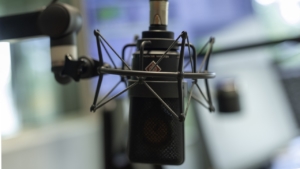
License Fees Schedule and Renewal
Schedule of License Fees
After the license is granted, the Company would be required to pay a license fee for an initial term of five years in the first instance, subject to renewal. The license fee for an initial term of five years is as follows:
CATEGORY A: Any location in the FCT, Lagos and Port Harcourt: Radio – ₦20million, Terrestrial TV – ₦15million, Cable – ₦10million.
CATEGORY B: Any location in all other states: Radio – ₦15million, Terrestrial TV – ₦11.25million, Cable – ₦7.5million
Public/Government Stations: ₦5million for 5 years or ₦1million per Television or Radio Channel per annum for 5 years
The renewal fee for Cable – Satellite Television (MMDS):
Category A: FCT, LAGOS and PORT HARCOURT = ₦5Million for Five years
CATEGORY B: Any location in all other states: ₦4million for 5 years
Direct Broadcast Satellite: (Single Channel): New and Renewal: ₦10million for 5 years.
Direct-to-Home (DTH) (Multichannel) New: ₦25million for 5 years Renewal: ₦50million for 5 years (with effect from May 19, 2005).
Dealer (Wholesaler): ₦120,000.00 per annum
Importer (Wholesaler): ₦120,000.00 per annum
Retailer ₦30,000.00 per annum
Others: % of income: 2½ of income Application form: ₦50,000.00 per set In considering an application for a broadcast license under the NBC Act, the Commission must certify that the applicant: Is a body corporate registered under the Companies and Allied matters Act or a station owned, established or operated by the Federal, State or Local Government can demonstrate to the satisfaction of the Commission that he is not applying on behalf of any foreign interest can comply with the objectives of the National Mass Communication Policy as applies to the electronic media, that is radio and television can give an understanding that the licensed station shall be used to promote National interest, unity and cohesion and that it shall not be used to offend the religious sensibilities or promote ethnicity, sectionalism, hatred and disaffection among the people.
Local Programme Content
Every licensee is required to adhere to a minimum of 60% local broadcast content for open television and 80% local broadcast content for radio. The cable/satellite retransmission stations are mandated to reflect a minimum of 20% local content in their programming.
How To Renew the Broadcast License in Nigeria
An application for the renewal of a license shall be made to the Commission within six months, before the expiration of the license. For the avoidance of doubt, the airwaves are held in trust for the public; therefore, the licensee is accountable to the public through the Commission. Thus, a public hearing may be organized, as part of the licensing renewal procedure, for the public assessment of affected broadcast station.
In applying for the renewal of a license, the applicant shall:
Clear all outstanding financial and administrative obligations to the Commission.
It shall submit to the Director-General, NBC, through the Commissions Zonal Director in the area of operation, copies of his application.
The application shall include:
A detailed report of the station’s faithfulness to its statements of intent in the original application form for the expiring license, per the second schedule of the NBC Decree No 38 of 1992.
A report of its compliance with the following: –
The relevant provisions of the 3rd schedule of the NBC Act 38 of 1992 such as submissions of quarterly schedules accompanied by synopses of the programme listed.
Keeping of daily station logbooks for transmitted programmes, transmitter output power and radiating frequencies.
Making available for inspection by the staff of the Commission, its broadcast facilities including equipment and a station logbook.
Other rules and regulations issued from time to time by the NBC statement of accounts for the period under review. Completed application forms for renewal of the license accompanied by a feasibility report for the renewal period sought.
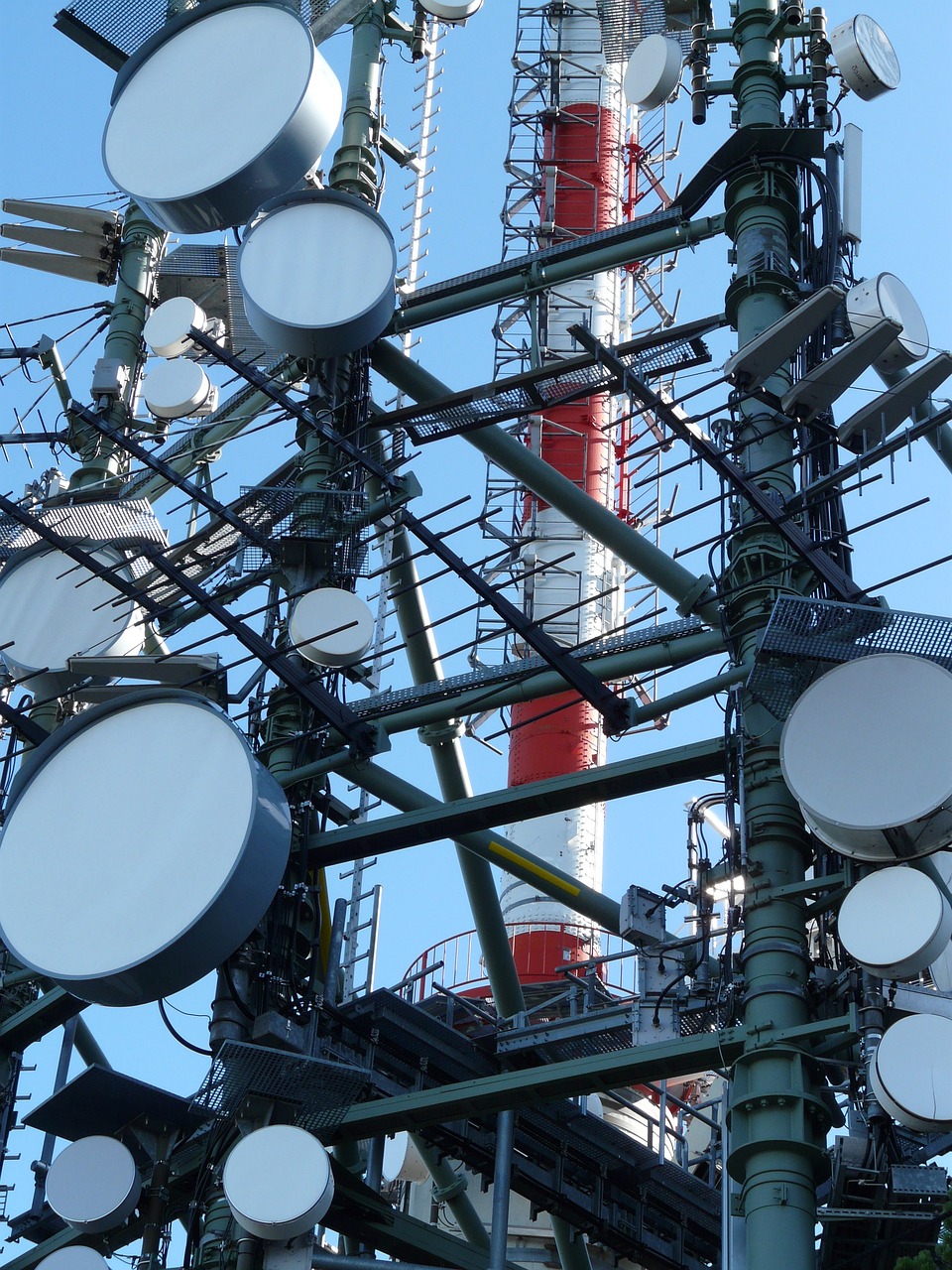
About Federal Communications Commission (FCC) and What Potential applicants for radio and television services should be aware of
The Federal Communications Commission (FCC) is an agency charged with regulating broadcasting and interstate communications by radio, television, wire, satellite, and cable. Potential applicants for radio and television services should be aware that frequencies for these services are always in demand. When application periods for new stations open, many competing applications are submitted. Submitting an application does not guarantee that you will receive a broadcasting station construction permit. In many areas of the country, there may not be frequencies available on which a new station can begin operating without causing interference to existing stations, which is a violation of FCC rules. Therefore, we do not recommend purchasing equipment until you have obtained a construction permit from the FCC.AM or FM radio transmission is unlikely. The FM band is limited in its extension beyond 107.9 MHz by the presence of aeronautical operations from 108 MHz to 136 MHz, and is also not allowed to extend below 88.1 MHz from television operations channel 6 to 82.0 to 88.0 MHz. The AM band was expanded from 1600 to 1700 kHz in the 1990s after years of international negotiations. However, these frequencies are reserved for existing stations that have caused significant interference in the lower part of the band.
Unauthorized use is prohibited. The FCC often asks whether ultra-low power transmission requires a license. Please note that unlicensed operation of broadcast stations is prohibited, even at powers of 1 watt or less. The only unlicensed operation permitted in the AM and FM broadcast bands is covered by Part 15 of the FCC rules and is limited to a coverage range of approximately 200 feet. (See the Commission’s Public Notice of July 24, 1991, which is still in effect.) Unlicensed operation is not permitted in the television bands (including 87.9 MHz, which is in the 82.0 band at 88.0 on channel 6). Illegal use of a station without a license can result in fines and/or prosecution (see an example of recent enforcement actions).
Legal and Engineering Assistance in the Preparation of Construction Permit Applications for Licensed Stations. Most applicants retain legal counsel and broadcast engineering consultants to perform frequency searches and help prepare the legal and technical portions of construction permit applications. The FCC does not maintain a list of, or recommend, any particular legal services or broadcast engineering consultants, but many of these services do advertise on the Internet and in trade publications. You must decide which services best suit your needs. Please be aware that the FCC cannot tell you whether a frequency will be available in a particular location or help in the preparation of applications (except for questions of a general nature).
Access to a Computer Is Essential. The Commission requires electronic filing of all its applications and has eliminated paper forms. This procedure has several advantages, including error checking of application entries before an application is accepted for filing, more rapid posting of data, and reduced processing time. Paper-filed applications will not be accepted for filing.
Application Filing Fees. For commercial AM, FM, and TV broadcast station applications, filing fees must be paid with the submission of any application. These fees are detailed in the Media Bureau Fee Filing Guide.
FCC Application Forms. FCC application forms may be used to help prepare data for an application, but please be advised that forms MUST be electronically filed. The presence of a “paper” or PDF form does not override the requirement for electronic filing. Broadcast application forms available for electronic filing can be retrieved through the LMS Help Center page.
FCC Rules. FCC rules pertaining to radio and television broadcast stations are contained in Parts 73 and 74 of the Code of Federal Regulations (CFR). The CFR is available through the Government Printing Office both online and in book form. For your convenience, here is a link to the Part 73 radio broadcast station rules. These rule lists are updated once a year, after the Code of Federal Regulations website is updated to reflect rule changes from the previous year.
Mutually Exclusive Commercial Auctions. Where conflicts occur between mutually exclusive commercial applicants (i.e., where interference would be created between applicants if all applications were granted), the conflict will be resolved by means of an auction. The auction process was mandated by Congress and the President in the Balanced Budget Act of 1997. Information about the auction process is posted on the Auction pages. Please note that we cannot provide advance information on when an auction or application filing window for a particular service might be opened. Once an application filing window is determined, a Public Notice will be issued and posted in several places on the FCC’s website.
Mutually Exclusive Noncommercial Educational Applications. Noncommercial educational station conflicts with other timely filed noncommercial educational applicants (i.e., where interference would be created between stations if all applications were to be granted) will be resolved through a point system.
AM Radio Broadcast Stations
AM Stations. AM stations occupy the frequencies of 540 kHz to 1700 kHz. These stations are allocated on a non-interference basis. To be acceptable, an application for a new AM broadcast station must show that no interference will be caused to other U.S. and foreign AM stations on the same frequency, or on the adjacent channels (out to 30 kHz above or below the desired frequency (see 47 CFR 73.37)). Applications must also consider the second harmonic frequency and intermediate frequency relationships per 47 CFR Section 73.182(s) (for example 2 x 800 kHz = 1600 kHz for the second harmonic relationship; or 800 kHz + 455 kHz I.F. frequency could affect reception on 1250 and 1260 kHz). In general, these complex engineering analyses require specialized knowledge and software, and are best performed by broadcast engineering consultants.
Rules. AM station rules include 47 CFR 73.1 through 73.190, and 73.1001 through 73.5009.
Form to Use, Application Filing Fee. Construction permit applications for new AM broadcast stations must be electronically filed on FCC Form 301 during a specified application window period. Noncommercial educational applicants should also use FCC Form 301. Commercial applicants must include the new station application filing fee listed in the Media Bureau Fee Filing Guide as well as FCC Form 159 with the fee payment and application. Please note that payments for commercial applications not paid online must be directed to the lockbox address and NOT the FCC in Washington, D.C.
Additional information about AM broadcast stations and applications is available at the Broadcast Radio Links page.
FM Commercial Radio Broadcast Stations
FM commercial stations may be authorized on 92.1 MHz to 107.9 MHz, corresponding to Channels 221 through 300. Noncommercial educational FM stations may also be authorized in this band but these applications must meet the spacing, 70 dBu city coverage and other technical criteria applicable to commercial stations.
Rules. FM commercial station rules include 47 CFR 73.201 through 73.333, and 73.1001 through 73.5009.
Requesting a New Allotment. An applicant/petitioner seeking to apply for a new allotment must:
Electronically file FCC Form 301, Application for Construction Permit, for the specific allotment proposed by the petitioner. This application must be complete and acceptable. The applicant must pay the rulemaking fee as well as the application filing fee listed in the Media Bureau Fee Filing Guide as well as FCC Form 159 with the fee payment and application. As noted above, payments for commercial applications not made online must be directed to the lockbox address and NOT the FCC in Washington, D.C.
On the same day Form 301 is filed, file a petition for rulemaking on letter-sized paper (an original and two copies) through the Office of the Secretary, FCC.
The petition must (1) include the proposed new channel, class, and the community to be served;
(2) the proposed new allotment site must meet the spacing requirements of 47 CFR Section 73.207 of the Commission’s rules to other stations, prior-filed applications, and vacant allotments, and
(3) the proposed new allotment site must provide at least a 70 dBu signal strength over the entire community of license.
The petition and application must cross-reference each other so that we can associate the two related filings. We will then consider the merits of the petition for rulemaking. If the petition for rulemaking is technically acceptable, the Media Bureau will release a Notice of Proposed Rulemaking that will indicate the date by which interested parties can file comments or counterproposals. If approved, an FM allotment will be created and placed in a future FM broadcast auction proceeding. At a minimum, the petitioner/applicant must qualify to bid in the auction. If the applicant is the successful bidder for the allotment, the previously filed Form 301 construction permit application will become the applicant’s post-auction long-form construction permit application. Petitions for rulemaking for new allotments should be directed (signed original + 2 copies) to the attention of the Audio Division (MB), c/o Office of the Secretary, FCC, 45 L Street NE, Washington, DC 20554.
Auctions. Once auction filing window dates are announced for allotments that were previously created, instructions for filing applications will be released on a Public Notice and posted on the Audio Division’s website. We cannot provide advance information on when the next auction or application filing window might take place (see the general information about auctions).
Additional information about FM commercial stations and applications is available at the Broadcast Radio Links page.
FM Noncommercial Educational Radio Broadcast Stations
FM noncommercial commercial (NCE) stations may be authorized on 88.1 MHz to 91.9 MHz, corresponding to Channels 201 through 220 (sometimes referred to as the “reserved band”). No commercial operation is permitted on these frequencies. FM noncommercial educational stations may also be authorized in the commercial FM band under the technical rules applying to that service (see the preceding section). Contour protection is used in the reserved band to determine if interference will exist to other stations (see 47 CFR Section 73.509).
Rules. FM noncommercial educational station rules include 47 CFR 73.501 through 73.599, and 73.1001 through 73.4280. A number of rules also refer to sections in the commercial FM rules (47 CFR 73.201 to 73.333). For FM NCE stations on Channels 201 through 220, no allotment will be established. Allocation is made via an on-demand system, with applicants receiving construction permits for facilities that will not cause interference to other stations. Interference calculations are made using specified signal strength contours. The protected service contour of a station (think of a rough circle at some distance from the transmitter site) for one station generally cannot overlap an interfering contour from another station. See rule section 47 CFR Section 73.509. Applicants must also protect pending applications that were filed before the announcement of the application filing window. Future filing window announcements will be made via Public Notice and posted at several locations on the Commission’s website.
Construction Costs. The FCC does not collect data concerning the costs of construction and equipment for noncommercial educational FM stations. Costs can vary enormously depending on how the station is constructed. Applicants and potential applicants should not purchase equipment before receiving a construction permit from the FCC, because they may not be able to use or resell it if the application is not approved.
Form to Use. FCC Form 340 for noncommercial educational stations must be used to apply for this type of FM station. Applicants for noncommercial educational stations pay no application filing fee. Applications for new noncommercial educational stations must be electronically filed only during the announced application filing window period. No paper filings will be accepted.
Additional information about FM noncommercial educational broadcast stations and applications is available at the Broadcast Radio Links page.
Low Power FM (LPFM) Noncommercial Educational Radio Broadcast Stations
Low power FM (LPFM stations operate with 1 to 100 watts of power and cover a radius up to approximately 5.6 km (3.5 miles). Current information about the low power FM filing service is maintained on the LPFM page. The Audio Division has also assembled a program to help find potentially available FM channels for LPFM stations.
Conclusion
Starting a TV broadcasting business in Nigeria is very expensive and requires a lot of resources, expertise and documentation. Whether you’re thinking of buying an existing business or a new business, consider all the steps and procedures necessary before starting a new broadcast television station, including the competition involved.
Having the right source of information along with a guide or consultant to support the process of starting your business will go a long way in ensuring that your business develops and grows. It is very important for the business owner to seek consulting services from experienced people.
Call-to-action
Tel: (+234) 802 320 0801, (+234) 807 576 5799
Email: enquiry@ mocaccountants.com
Office Address: 5, Ishola Bello Close, Iyalla Off Street, Alausa, Ikeja, Lagos, Nigeria
Enquiry Contact Form



There are no comments